
A leak in water heater can be a real headache, showing up as puddles or wet spots when you least expect it. It’s not just about the mess; a leaking water heater can lead to bigger problems if you don’t catch it early. This guide will help you figure out why your water heater is leaking and what you can do about it, from simple fixes to knowing when it’s time for a new one.
Key Takeaways
- A leak in water heater can stem from various issues, including a faulty drain valve, excessive pressure, tank corrosion, or loose pipe connections.
- Look for puddles, wet spots, leaks during operation, or changes in water quality as signs of a leak in water heater.
- Diagnosing a leak involves ruling out condensation, identifying the leak’s source (top, side, or bottom), and checking pipe fittings.
- Immediate steps for a leak in water heater include turning off power and water, draining the tank if needed, and scheduling a professional inspection.
- While some leaks can be fixed by tightening fittings or replacing a valve, a corroded tank or severe internal damage usually means the water heater needs replacement.
Common Causes of a Leak in Water Heater
Dealing with a leaking water heater can be a real pain, right? It’s not just the mess; it’s the worry about what’s going on inside and how much it’s going to cost. Leaks don’t just pop up out of nowhere, though. There are usually a few common culprits behind that drip, drip, drip. Understanding these can help you figure out what’s going on and if it’s something you can handle or if it’s time to call in the pros.
Faulty Drain Valve
At the very bottom of your water heater, you’ll find a drain valve. Its job is to let you empty the tank for maintenance, like flushing out sediment. Over time, this valve can get a little loose, or the internal parts might just wear out. When this happens, it’s a pretty common spot for water to start seeping out. It might be a slow drip at first, but it’s definitely a sign something needs attention. Sometimes, just giving it a good tighten does the trick. If it keeps leaking after you tighten it, the valve itself might need to be replaced. It’s a relatively simple fix, but you’ll want to make sure the water and power to the heater are off before you mess with it.
Excessive Tank Pressure
Water expands when it gets hot, and that expansion creates pressure inside your water heater tank. If the temperature is cranked up too high, or if there’s no way for that extra pressure to escape safely, the tank can start to leak. Think of it like a soda bottle you shake up – eventually, something has to give. A properly working water heater has a temperature and pressure (T&P) relief valve designed to open and let out excess pressure. If this valve is faulty or if your home’s overall water pressure is too high, you might see leaks. Lowering the temperature setting to around 120°F is often recommended and can help reduce pressure buildup. You can also check out options for tankless water heaters if you’re looking for a different approach to heating water.
Corrosion in the Tank
This is one of the more serious reasons your water heater might be leaking. Over the years, minerals and sediment can settle at the bottom of the tank. If you don’t regularly flush your water heater, this gunk can start to eat away at the tank’s inner lining, causing rust and corrosion. Once the tank itself starts to corrode, it’s usually game over. The metal gets thin and weak, and eventually, it just can’t hold water anymore. Signs of corrosion, like rust-colored water or a metallic smell, often mean it’s time for a new water heater. Regular maintenance, like flushing the tank, can help prevent this from happening too soon.
Loose Connections or Fittings
Water has to get into and out of your water heater somehow, right? That happens through pipe connections, usually at the top of the unit. These connections involve fittings and pipes that can loosen up over time. Why? Well, the constant heating and cooling of the water causes the metal pipes and fittings to expand and contract, and this movement can gradually loosen things. It’s not always obvious, but a slow drip from these areas can lead to bigger problems. You’ll want to check where the cold water comes in and the hot water goes out. If you spot any moisture or drips there, tightening them might be the fix. If they’re really corroded or damaged, they might need to be replaced entirely.
It’s easy to overlook small drips or puddles, especially if they’re hidden under the unit. But even a small leak can cause significant water damage to your floors and walls over time, not to mention the potential for mold growth. So, it’s always best to address any signs of water around your water heater promptly.
Diagnosing a Leak in Water Heater
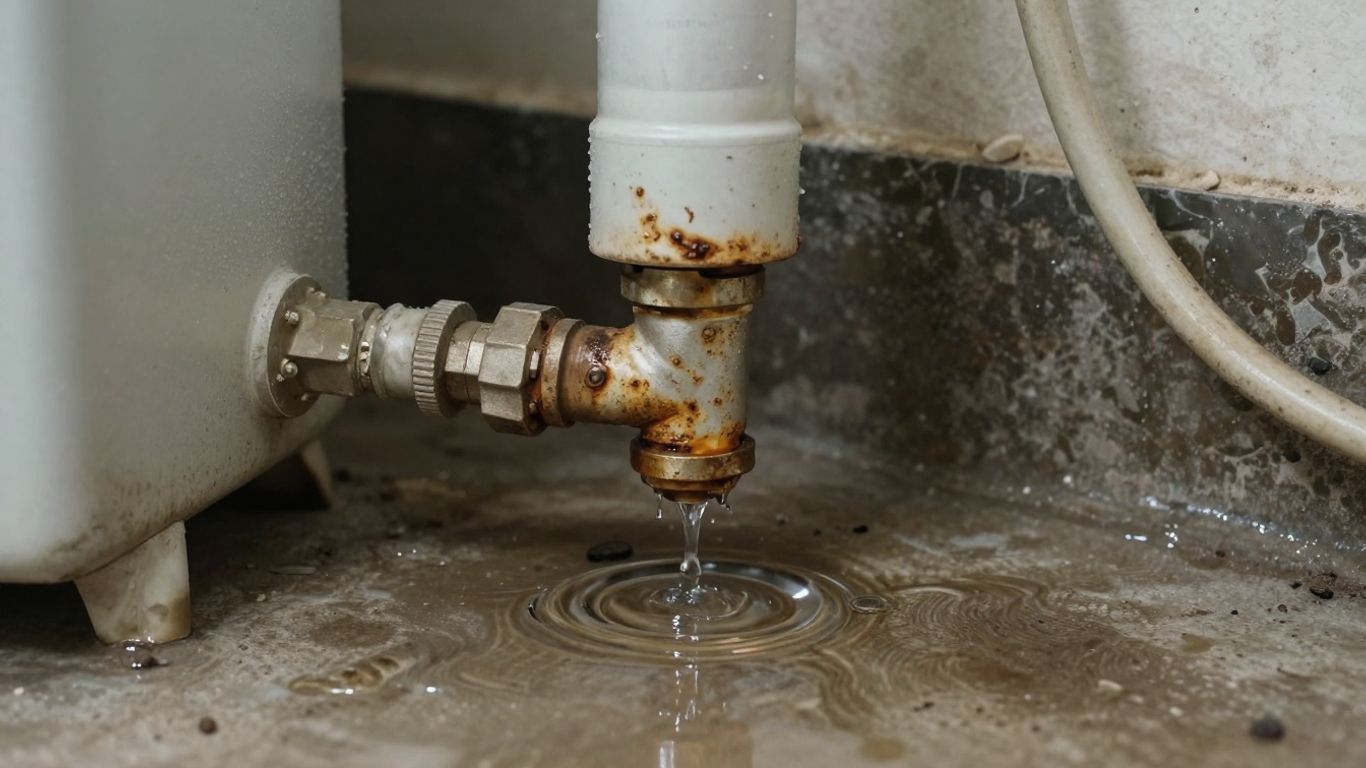
So, you’ve spotted some water where it shouldn’t be. Before you panic, let’s figure out what’s really going on. Sometimes, what looks like a leak is just a bit of condensation, especially on gas models when cold water hits the hot tank, or on electric ones in a humid room. This usually dries up on its own and isn’t a sign of trouble.
Ruling Out Condensation
Condensation can be tricky. On electric heaters, the cold tank surface can sweat in a warm, humid environment. It’s usually not a big deal and often hidden by the insulation. For gas heaters, condensation might happen right after the burner kicks on or when cold water refills the tank. It’s typically temporary. The key difference is that condensation usually evaporates, while a leak leaves a persistent wet spot or puddle.
Identifying the Leak’s Source
Once you’re sure it’s not just condensation, it’s time to play detective. Safety first, though! If you’re going to get up close, make sure the power (for electric) or gas supply is turned off. You can usually find the breaker for an electric heater in your main electrical panel, or a gas shut-off valve near the unit itself. Also, shut off the cold water supply valve going into the heater to stop more water from getting out.
Here’s a quick rundown of common leak spots:
- Top of the Heater: Often points to issues with pipe connections or the temperature and pressure (T&P) relief valve. These connections can loosen over time due to heating and cooling cycles.
- Side of the Heater: This could be the T&P valve acting up, or for electric models, it might be a faulty gasket around a heating element.
- Bottom of the Heater: This is usually the most concerning. A leak from the base often means the tank itself is compromised, perhaps due to rust or internal damage.
Checking Pipe Fittings and Connections
If you suspect the leak is from the top, start by looking closely at where the pipes connect to the tank. Are the fittings wet? Sometimes, a simple tightening with a wrench can fix a loose connection. If you see rust or corrosion around a fitting, it might need to be replaced entirely. Don’t overtighten, though, as you could damage the threads or the tank itself. If you’re not comfortable with this, it’s best to call a pro.
Remember, while you can do some basic checks, water heaters involve electricity or gas and hot water. If you’re ever unsure or uncomfortable, it’s always safer to call a qualified plumber. They have the tools and experience to diagnose and fix the problem correctly and safely.
Signs Your Water Heater Is Leaking
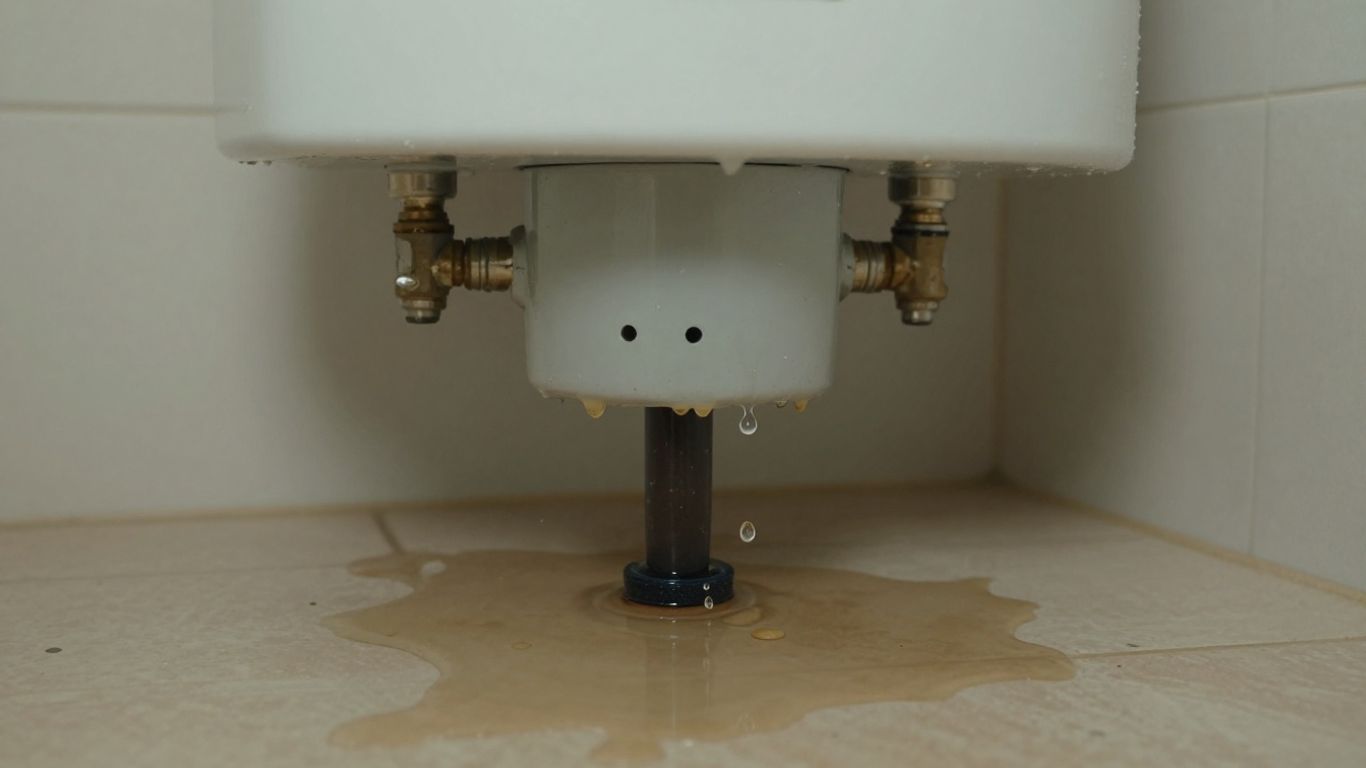
When you suspect something’s off with your water heater, catching the signs early can prevent bigger hassles. Leaks are often subtle at first, but even small signs should never be ignored. Let’s break down the key things you’ll want to look for:
Puddles and Wet Spots
- Look for water pooling around the base of the heater – it might be a slow leak that’s only obvious after a few hours.
- Damp or water-stained floors near the water heater are a classic sign.
- Check if the puddles grow after using hot water heavily, which can show the leak gets worse during operation.
Leaks During Operation
- Some leaks show up only while the water heater is working and pressure is high inside the tank.
- Watch for water trickling down the sides during or right after a big load of hot water (like showers or laundry).
- If you see water at the same time as you hear a popping or sizzling noise, it can mean the tank is cracked or a valve is failing.
Changes in Water Quality
- Notice any rusty or cloudy water? This can be a warning that the inside of the tank is corroding.
- Metallic smells or strange tastes in your hot water may also indicate internal corrosion or sediment buildup.
- Foul-smelling or discolored water could mean the tank lining is wearing out, which often leads to leaks soon after.
| Sign | What to Check | What It Could Mean |
|---|---|---|
| Puddles/wet spots | Around base and fittings | Drips from valves or tank |
| Leak during operation | Sides and bottom, especially after heavy use | Faulty valves, internal tank cracks |
| Water quality change | Rust, cloudiness, metallic taste in hot water | Rust/corrosion inside the heater |
Small leaks might seem easy to overlook, but water heater leaks often signal bigger problems inside the system—like corrosion or failing parts. Addressing these early can help you avoid major water damage or even a total tank failure, as noted in the symptoms of water heater problems.
Pinpointing the Source of the Leak
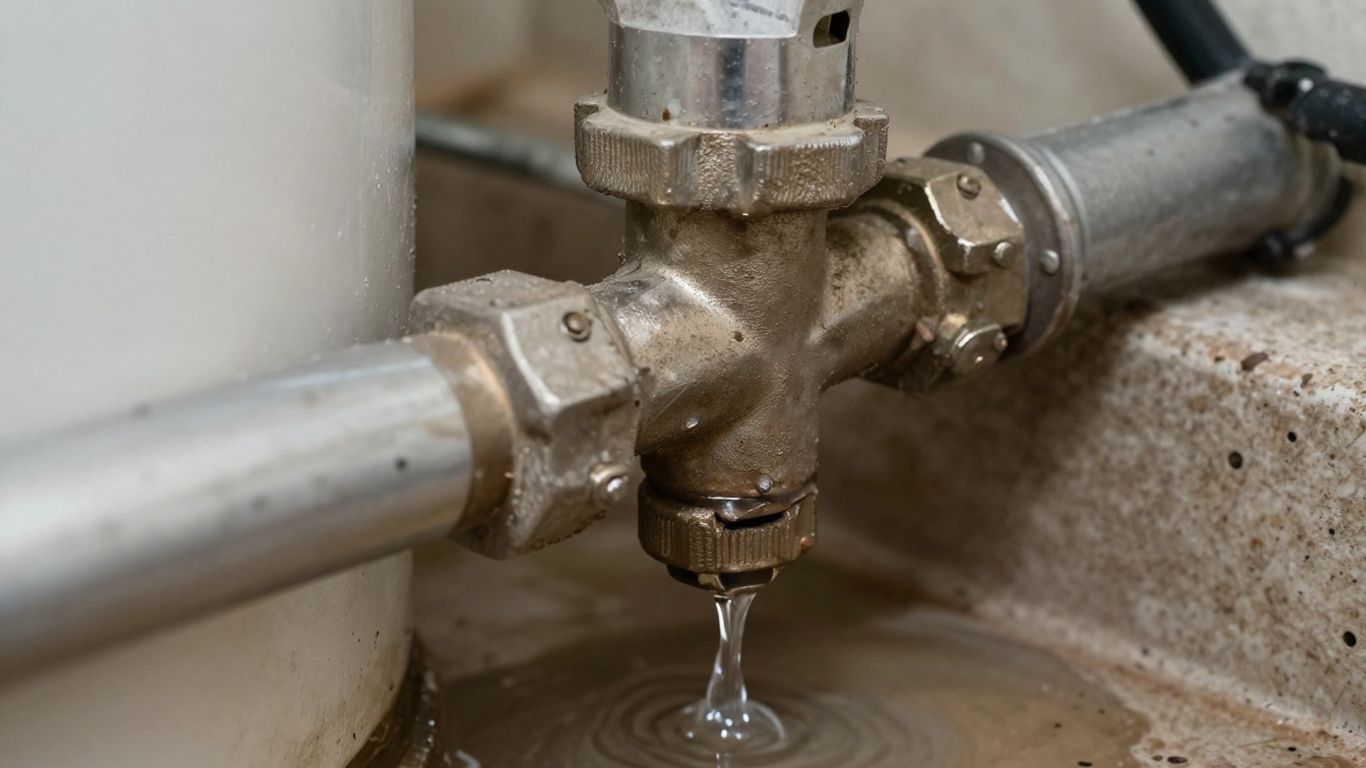
Alright, so you’ve got a leak. The next big step is figuring out exactly where it’s coming from. This is super important because a leak from the top might be a quick fix, but one from the bottom? That’s usually a bigger deal. Let’s break down where you might find water and what it could mean.
Leaks from the Top of the Water Heater
If you see water pooling or dripping from the upper part of your water heater, it’s often related to the plumbing connections or the safety valve. Think about the pipes that bring cold water in and take hot water out – they connect at the top. Sometimes, these connections just get a little loose over time, especially with the constant heating and cooling. The Temperature and Pressure (T&P) relief valve, another safety feature usually found up top, can also be the culprit. It might be faulty, or it could be doing its job by releasing excess pressure or heat. If it’s the latter, that’s a sign something else in your system isn’t quite right.
Leaks from the Side of the Water Heater
Leaks appearing on the side of the tank are a bit less common but still happen. For electric water heaters, the heating elements are usually on the side, sealed in with gaskets. If one of these gaskets wears out or fails, water can start to seep out right there. For both electric and gas models, the T&P relief valve’s discharge pipe often runs down the side of the tank. If you see water coming from this pipe, it’s essentially the same issue as a leak from the valve itself – either the valve is bad, or there’s too much pressure.
Leaks from the Bottom of the Water Heater
Seeing water at the very base of your water heater is usually the most concerning. This often points to a more serious internal problem. It could be the drain valve at the bottom, which might be old, corroded, or just not fully closed. But more often than not, a leak from the bottom means the tank itself is compromised. Over years of use, the protective lining inside the tank can corrode away, leading to rust and eventually, a leak that can’t be fixed. In these cases, replacement is typically the only real option.
Remember, water heaters are essentially big, pressurized tanks holding hot water. When they start leaking, especially from the bottom, it’s a sign that the integrity of that tank might be compromised. It’s not something to ignore, as a small leak can quickly become a big problem.
Immediate Steps for a Leaking Water Heater
Okay, so you’ve spotted a leak. Don’t panic, but don’t ignore it either. The first thing you need to do is stop the flow of water and power to the unit. This is super important for safety and to prevent more damage. Seriously, this is the most critical step to take right away.
Turn Off Power and Water Supply
For electric water heaters, you’ll want to find your home’s electrical panel and flip the breaker that controls the water heater. If you have a gas model, look for an on/off switch directly on the unit itself and turn it to the ‘off’ position. After that, you need to shut off the water supply. There’s usually a valve on the cold water pipe leading into the heater. If the leak is really bad and makes it unsafe to get to that valve, you might have to turn off the main water supply for your entire house. It’s a bit of a hassle, but better safe than sorry, right? You can find more details on how to handle this at shut off the water supply.
Drain the Water Heater if Necessary
If the leak is still happening and it’s safe to proceed, you might need to drain some water from the tank. Grab a garden hose, attach it to the drain valve at the bottom of the water heater, and run the other end to a safe spot where the water can go without causing more problems – like a floor drain or outside. Just be really careful here; if the water is still hot, draining it can cause burns. So, let it cool down a bit if you can.
Schedule a Professional Inspection
Once you’ve got the power and water shut off, and maybe drained some water, it’s time to figure out what’s really going on. Sometimes, it’s just a loose pipe fitting you can tighten. But if you see signs of serious corrosion, a leak from the tank itself, or if the pressure relief valve is acting up, you’ll definitely want to call in a pro. They have the tools and know-how to properly diagnose the issue and fix it right, or tell you if it’s time for a new unit. Trying to fix major problems yourself can sometimes make things worse, so don’t hesitate to get expert help.
Fixing Common Water Heater Leaks
So, you’ve found a leak. Don’t panic! Sometimes, it’s a fix you can handle yourself without calling in the cavalry. Let’s look at a few common culprits and how to tackle them.
Tighten Pipe Fittings
This is probably the most common and easiest fix. Over time, the pipes connected to your water heater can loosen up a bit. This is often due to the constant heating and cooling cycles. If you see water dripping from where a pipe connects to the heater, grab a wrench.
- Locate the leaky connection. It’s usually where the cold water comes in or the hot water goes out.
- Gently tighten the fitting. Turn it clockwise with your wrench. Be careful not to overtighten, as this can strip the threads or crack the fitting, making things much worse.
- Check for leaks. Turn the water back on slowly and see if the drip has stopped.
If tightening doesn’t work, the fitting might be damaged, or the pipe itself could be the issue. For electric water heaters, issues with these connections can sometimes lead to rusty or smelly water.
Replacing the T&P Valve
The T&P (Temperature and Pressure Relief) valve is a safety device. It’s designed to release water if the temperature or pressure inside the tank gets too high. If this valve itself is leaking, it might be faulty or it might be doing its job because the pressure is actually too high.
- First, check the pressure. If you suspect high pressure, you might need to adjust your home’s main water pressure or consider adding an expansion tank. Sometimes, just turning down the thermostat on the water heater can help.
- If the valve is old or damaged, it needs replacing. This is a bit more involved. You’ll need to shut off the water supply and drain the tank. Then, unscrew the old valve and install a new one. Make sure you get the right type of valve for your heater.
Replacing a T&P valve is a critical safety repair. If you’re not comfortable with plumbing or unsure about the pressure issues, it’s best to have a professional handle this.
Replacing the Drain Valve
Your water heater has a drain valve at the bottom, usually near the floor. This is used to empty the tank for maintenance or flushing. If this valve starts leaking, it’s usually because it’s not closing all the way or the valve itself is damaged.
- Try tightening it first. Sometimes, the valve handle just needs a little snugging up.
- If tightening doesn’t work, replacement is likely needed. Similar to the T&P valve, you’ll need to shut off the water and drain the tank. Then, you can unscrew the old drain valve and screw in a new one. Make sure to use plumber’s tape on the threads of the new valve for a good seal.
When Replacement is Necessary for a Leak
Sometimes, a leak isn’t just a simple fix. If you’re seeing water where it shouldn’t be, it might be time to think about getting a whole new water heater. It’s a bummer, I know, but trying to patch up something that’s really gone is usually a waste of time and money.
Corroded Tank Issues
If your water heater’s tank itself is showing signs of rust or corrosion, that’s a big red flag. Over time, minerals in the water can eat away at the metal lining. You might see rust-colored water coming out, or worse, a slow drip that turns into a steady stream. A corroded tank usually means it’s beyond repair. It’s not something you can just seal up; the damage is internal and ongoing. Think of it like a hole in a tin can – you can’t really fix that permanently. When this happens, you’re pretty much looking at a full replacement. It’s better to get ahead of it before it causes a major flood.
Severe Internal Damage
Beyond just corrosion, there can be other types of severe internal damage. Maybe a component inside has completely failed, or perhaps there’s a crack that’s just too big to handle. If you’ve tried some of the simpler fixes, like tightening connections or replacing a valve, and the leak persists or seems to be coming from deep within the unit, it’s a strong indicator of a more serious problem. This is where you might need to call in a professional to give it a good look, but often, they’ll tell you it’s not worth the repair cost.
Age of the Water Heater
Water heaters don’t last forever, you know? Most of them have a lifespan of about 8 to 12 years, depending on how well they’re maintained and how much you use them. If your unit is getting up there in age, say 10 years or more, and it starts leaking, it’s often just a sign that it’s time for an upgrade. You might have already dealt with a few minor issues, but a leak can be the final straw. Instead of pouring more money into an old system, it’s usually more practical to invest in a new one. This way, you get better efficiency and avoid future headaches. It’s worth looking into different types of water heaters, like a 50-gallon electric model, to see what fits your needs best.
When a water heater tank has a hole, it’s a pretty clear sign that a replacement is needed. The unit will keep trying to fill itself up to make up for the lost water, which just means the problem is only going to get worse. It’s definitely time to consider a new one to avoid bigger issues down the road.
Sometimes, a small drip can turn into a big problem. If you notice a leak, it’s important to act fast. Ignoring it could lead to more damage and costly repairs down the road. Don’t wait for a minor issue to become a major headache. Visit our website today to learn more about when it’s time to call a professional and keep your home safe and dry.
Wrapping Up Your Water Heater Leak Search
So, you’ve gone through the steps to figure out why your water heater is leaking. It might be something simple like a loose pipe fitting, or it could be a sign of a bigger problem with the tank itself. Remember, if you’re not comfortable with a repair, it’s always best to call in a professional. They can get it sorted out safely and correctly. Keeping an eye on your water heater and doing regular checks can help you catch issues early, saving you from bigger headaches down the road. Hopefully, this guide helped you get a better idea of what’s going on with your water heater.
Frequently Asked Questions
What are the most common reasons a water heater starts leaking?
Water heaters can leak for a few main reasons. Sometimes, the drain valve at the bottom might be loose or faulty. Other times, the pressure inside the tank can get too high, especially if the temperature is set too high. Rust and corrosion building up inside the tank over time is also a big cause. Lastly, the connections where the pipes attach to the heater can become loose or worn out.
How can I tell if my water heater is leaking, and not just dripping condensation?
Look for actual puddles or wet spots around the base of your water heater. Condensation can sometimes form on the outside, especially on cold days, but it usually dries up quickly or is hidden by insulation. A real leak will keep dripping and create noticeable wetness or standing water.
If I see water coming from the top of my water heater, what could be the issue?
Leaks from the top usually mean there’s a problem with the pipe connections where the cold water comes in or the hot water goes out. It could also be that the temperature and pressure relief valve (T&P valve) is leaking. Sometimes, just tightening these connections can fix it, but if the valve is bad, it might need replacing.
What does it mean if my water heater is leaking from the bottom?
A leak from the bottom of your water heater is often more serious. It could be a problem with the drain valve not closing properly, but it can also mean the tank itself is corroded and has developed a crack or hole. If the tank is the issue, you’ll likely need to replace the whole unit.
What are the first things I should do if I discover my water heater is leaking?
The very first thing to do is shut off the power or gas supply to the water heater to prevent any further damage or safety hazards. Then, turn off the water supply to the tank. If you can safely do so, you might need to drain some water from the tank, but always be cautious, especially if the water is hot.
Can a leaking water heater always be fixed, or do I need a new one?
It depends on the problem. Small issues like loose pipe fittings or a faulty drain valve can often be repaired. However, if the leak is coming from the tank itself due to rust or corrosion, or if there’s severe internal damage, replacing the entire water heater is usually the best and most cost-effective solution.