
Key Takeaways
Water heater repairing starts with identifying the symptom, isolating the likely cause, and making safety the first decision. Some maintenance is manageable for a homeowner, but gas, electrical, pressure, and tank repairs often call for a qualified professional.
- Check whether the problem affects heating, pressure, water quality, or the tank itself.
- Shut off the appropriate energy and water supplies before investigating a serious fault.
- Sediment, worn valves, failed heating parts, and corrosion are common sources of trouble.
- A leaking tank usually points toward replacement, while a leaking valve may be repairable.
- Compare the unit’s age, repair cost, condition, and efficiency before choosing what comes next.
Understanding how your water heater works
A water heater is a fairly simple appliance, but several parts have to work together to deliver safe, consistent hot water. Tank models store and heat a reserve, while tankless models heat water as it moves through the unit. Knowing the basic arrangement makes it easier to describe a problem and avoid guessing at a repair.
The surrounding plumbing matters too. A useful overview of residential plumbing systems explains how supply lines, valves, fixtures, drainage, and water heaters fit into the larger home system. That context helps when a symptom appears to involve more than the heater itself.
Key components in tank water heaters
A tank water heater contains an insulated steel reservoir, a cold-water inlet, a hot-water outlet, and a heating source. Electric models use one or two heating elements controlled by thermostats; gas models use a burner, gas control valve, and venting system. Both types also have a temperature-and-pressure relief valve and usually an anode rod that helps slow corrosion inside the tank.
The dip tube carries incoming cold water toward the bottom, while heated water rises toward the outlet. If a component fails, the result may be no hot water, uneven temperatures, strange sounds, or a leak. The pressure relief valve should never be capped, blocked, or bypassed.
How tankless water heaters heat water
Tankless units do not keep a large volume of water hot. When a tap opens, a flow sensor activates the burner or electric heating elements, and water passes through a heat exchanger before reaching the fixture. The unit’s output depends on incoming water temperature, flow rate, and its heating capacity.
Mineral buildup can restrict flow through the heat exchanger and reduce performance. Ignition, venting, sensor, or control-board faults can also prevent the system from starting. Because the parts are compact and the controls can be complex, repeated error codes deserve professional diagnosis rather than repeated resets.
Common differences between electric and gas models
Electric water heaters generally need a dedicated high-voltage circuit, while gas units need a safe fuel supply, combustion chamber, and properly installed vent. An electric fault may show up as a tripped breaker or failed heating element. A gas fault may involve the pilot, ignition system, burner, gas control, or venting.
The repair approach is therefore different even when the symptom is identical. A cold shower does not identify the failed part by itself. Before opening a panel or attempting a reset, confirm which type of heater you have and read the manufacturer’s instructions.
Warning signs of a failing water heater
A heater that takes longer to recover, produces water that changes temperature, or makes popping and rumbling sounds may need attention. Rust-colored water, a persistent sulfur odor, dampness around the base, or an unexpectedly high energy bill can add to the concern. Early diagnosis can limit damage when the cause is a replaceable part rather than a failed tank.
Watch the pattern, not just one episode. A single cold shower may follow unusually high demand, but recurring symptoms, visible corrosion, or water collecting near the unit should be investigated promptly.
Diagnosing common water heater problems
Good diagnosis begins with observation. Note whether all fixtures are affected, whether the water is cold or merely lukewarm, and whether the symptom changes when other taps are running. This simple information can separate a heater problem from a plumbing restriction or an issue with household demand.
Do not remove covers, test live electrical parts, or disassemble gas controls just to confirm a theory. If the unit is leaking heavily, smells like gas, or has a damaged power connection, move directly to the safety steps in the next section.
Why the water runs cold
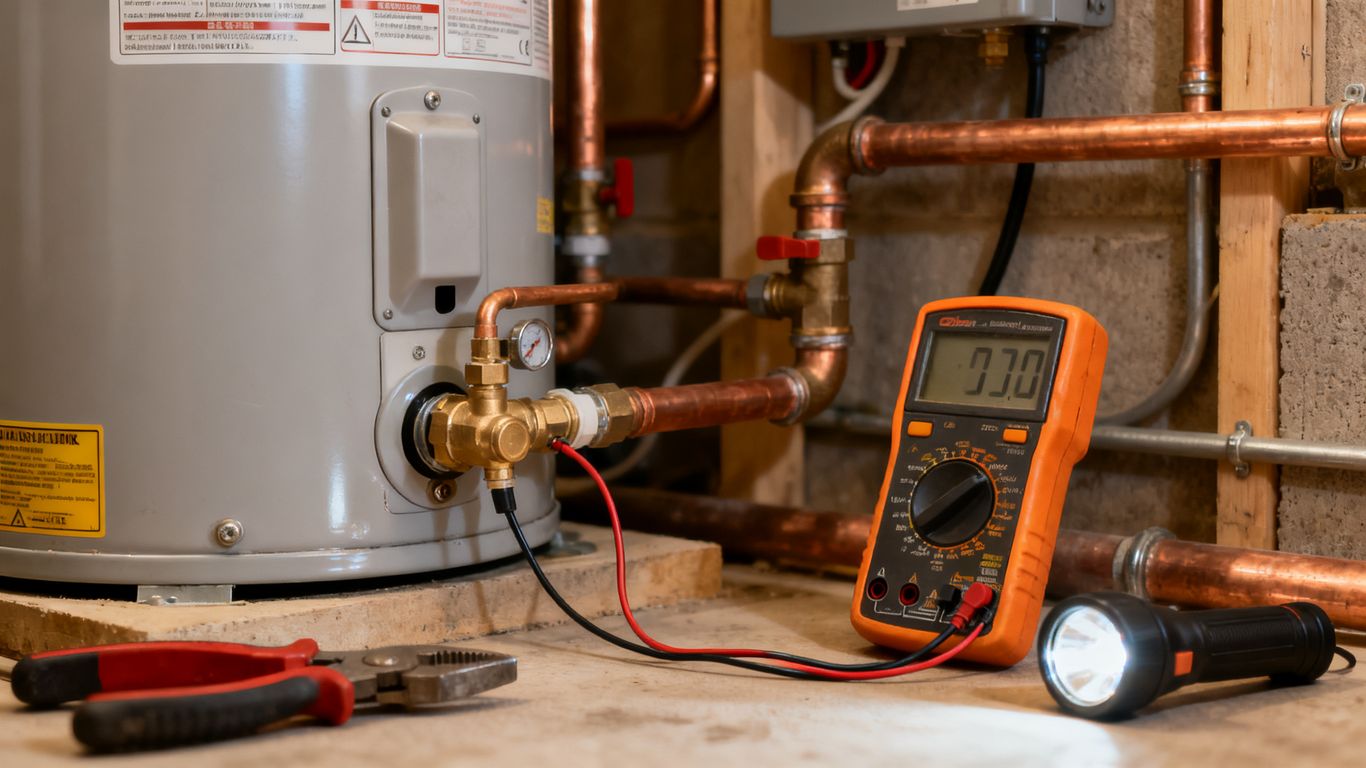
No hot water from an electric tank may result from a tripped breaker, failed element, thermostat trouble, or a wiring fault. On a gas model, the pilot or ignition system may not be operating, or the gas supply or burner may have a problem. Tankless units can shut down because of flow, ignition, sensor, venting, or mineral-buildup issues.
Start with safe, visible checks: confirm the household has power, look for a tripped breaker without repeatedly resetting it, and check whether a gas appliance has an obvious supply interruption. If the problem returns after a reset or relight, arrange a proper inspection. A water heater warranty repair resource can also help you think through warranty status before paying for parts or labor.
What causes low hot-water pressure
Low hot-water pressure can come from a partially closed shutoff valve, a clogged aerator, a restrictive showerhead, or mineral buildup in a line. If only hot water is weak at one fixture, the fixture or its connection is a likely starting point. If every hot tap is affected, investigate the heater outlet, valves, and nearby piping.
Compare hot and cold pressure at the same fixture. A pressure-reducing valve, whole-home plumbing restriction, or supply issue may be involved, so replacing a heater part without checking the rest of the system can waste money.
How to identify leaks, noises, and discolored water
Look for the highest wet point rather than assuming water at the base came from the tank. Connections, the temperature-and-pressure relief valve, drain valve, and nearby supply pipes can all drip. Popping or rumbling usually suggests sediment heating at the bottom of a tank, while rusty or brown hot water may indicate corrosion involving the anode rod or tank.
Use a dry paper towel around fittings to trace a slow seep, but do not touch hot surfaces or disturb a relief valve. If discoloration comes from both hot and cold taps, the issue may be in the home’s piping or water supply rather than the heater.
When error codes point to a larger problem
An error code is a clue, not a complete diagnosis. It may identify an ignition failure, blocked airflow, a temperature sensor problem, insufficient flow, or another condition that caused the unit to stop. Record the code, the time it appeared, and anything unusual such as repeated cycling or a change in water pressure.
Follow only the reset procedure stated in the manual. If the code returns, the system may have an underlying combustion, electrical, venting, or control problem. Repeated resets can hide a dangerous fault and may turn a small service call into a more expensive repair.
Preparing for a safe water heater repair
Preparation is part of the repair, not an optional preface. Water inside a tank can be hot enough to burn, and the appliance may combine electricity, gas, pressure, and sharp metal edges. Before touching anything, identify the controls and make sure everyone in the home knows the heater is being serviced.
A safe repair also includes knowing when to stop. If the situation involves an active gas leak, smoke, a damaged electrical cable, uncontrolled water, or a badly corroded tank, secure the area and call for qualified help rather than improvising.
When to shut off the gas, electricity, or water
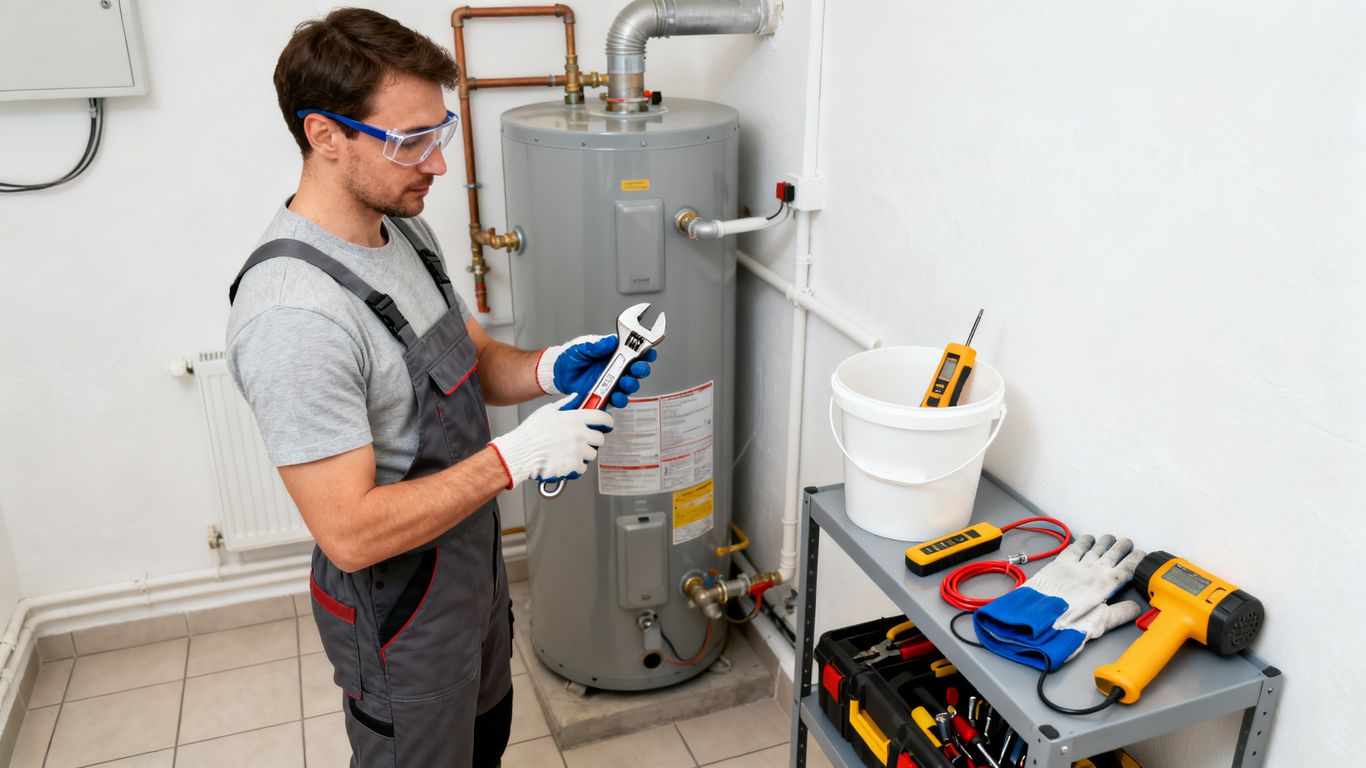
For an electric heater, switch off the dedicated breaker before removing access covers or disconnecting wires. For a gas heater, turn the gas control to the manufacturer’s specified setting when appropriate, and close the nearby gas shutoff if you suspect a leak. If you smell gas, leave the area, avoid switches and flames, and contact the gas utility or emergency services from a safe location.
Close the cold-water supply valve when a fitting, drain valve, or tank connection is leaking. Open a hot tap only when the procedure calls for pressure relief and the water can be handled safely. Never assume a closed valve has stopped all flow until you verify it.
Tools and protective equipment you may need
Basic inspection may require a flashlight, adjustable wrench, screwdrivers, a bucket, towels, a hose, and a noncontact voltage tester. Gloves and eye protection help with sharp panels, sediment, and splashing water, while a thermometer can help check outlet temperature without relying on touch.
For a planned tank flush, use a hose rated for hot water and route it to a safe drain point. Keep the work area dry around electrical equipment, and do not use tools that are wet, damaged, or unsuitable for the fastener.
Repairs that require a licensed professional
Gas-line work, venting changes, burner repairs, electrical diagnosis inside energized equipment, tank replacement, and modifications to pressure or temperature controls are not good first projects. Local codes may also require permits, specific connectors, seismic restraint, or inspection. A licensed technician can test combustion and electrical conditions rather than relying on symptoms alone.
Professional help is especially appropriate when the heater is in a confined space, the leak source is unclear, or the unit has extensive rust. For a local service appointment, schedule water heater help rather than taking apart a system you cannot safely test.
Safety risks involving gas, electricity, and scalding water
Gas can ignite, electricity can shock, and stored hot water can cause serious burns. Pressure can also discharge suddenly through a relief valve or damaged connection. Keep children and pets away, wear protective equipment, and wait for water to cool before draining or opening a fitting.
Do not block combustion air openings or vent outlets. If a safety device has discharged, leaks, or appears corroded, do not simply reset or replace it without finding the reason. The safest repair is the one that leaves every protective control operating as designed.
Fixing common water heater issues
Once the cause is reasonably clear and the work is within your skill level, a few repairs and maintenance tasks are common. The exact procedure varies by model, so the manual should guide part selection, shutoff steps, and adjustment limits. When the diagnosis is uncertain, paying for inspection is usually cheaper than replacing the wrong component.
The goal is not merely to restore heat for one day. A sound repair should also address the condition that caused the failure, confirm that connections are dry, and verify that temperature and pressure controls operate safely.
Replacing a faulty heating element or thermostat
Electric elements can fail open, short, or become coated with mineral deposits, while thermostats can misread temperature or fail to switch the element. After power is locked out and verified off, a technician can test resistance and continuity, drain the tank below the element, and install a correctly rated replacement with a sound gasket.
A thermostat replacement also requires correct placement and wiring. Loose connections create heat at the terminal and can damage the new part. Restore power only after the tank is full, because energizing a dry element can destroy it quickly.
Relighting a pilot light and checking ignition problems
Some gas heaters use a standing pilot, while newer units may use electronic ignition. If the manual permits relighting, follow its sequence exactly and wait the stated time before trying again. A pilot that will not stay lit may point to a thermocouple, gas control, airflow, or venting issue rather than a simple lighting problem.
Never use a match near a suspected gas leak, and never bypass an ignition safety control. If ignition fails repeatedly, stop attempting resets and have the burner and vent system inspected.
Flushing sediment from the tank
Sediment settles at the bottom of a tank and can create rumbling sounds, reduce usable capacity, and make heating less efficient. A flush generally involves shutting down the heat source, closing the cold-water inlet, attaching a hose to the drain valve, and directing the discharge somewhere safe. The tank must be refilled fully before an electric element is powered or a gas burner is returned to normal operation.
Because the drain valve may be fragile and the water may remain very hot, this is not risk-free maintenance. A useful sequence is:
- Turn off the heat source and allow the water to cool.
- Connect a hose securely and route it to a suitable drain.
- Open the drain and, when appropriate, a hot tap to admit air.
- Refill and confirm clear, steady flow before restoring heat.
The discharged water may be cloudy at first, but persistent debris, a clogged valve, or a tank that will not drain calls for professional help. Flushing can remove buildup; it cannot repair a tank already weakened by corrosion.
Repairing or replacing a leaking valve
A leak at a threaded connection, drain valve, or relief valve may be repairable if the tank and surrounding metal are sound. Shut off the supply and energy source first, relieve pressure carefully, and identify the exact valve before removing it. Replacement parts must match the application and rating, especially for the temperature-and-pressure relief assembly.
Do not plug a relief-valve opening or install a shutoff downstream of it. After the repair, refill and inspect slowly for seepage. A valve that continues to discharge may be responding to excessive temperature, pressure, or an expansion problem that still needs diagnosis.
Addressing pressure and temperature problems
Water that is too hot can indicate a thermostat setting or control failure, while weak hot water may come from a restriction, sediment, or a heater that cannot meet demand. Check the measured outlet temperature and the condition of the mixing valve if one is installed. Never increase the setting simply to compensate for inadequate capacity without considering scald risk.
Pressure problems also require attention to the home’s plumbing and expansion control. Adjustments should stay within the manufacturer’s instructions and local requirements. If pressure rises when the heater operates, a qualified plumber should test the system rather than treating the symptom alone.
Handling water heater leaks and damage
A small drip can become a soaked floor, damaged drywall, or mold-friendly moisture surprisingly quickly. The first response is to protect people, stop the flow if it is safe, and move valuables away from the area. Photograph the condition before cleanup if an insurance claim may be involved, but do not delay emergency shutoff for documentation.
The location and behavior of the water tell you more than the amount on the floor. A fitting leak is a different problem from water emerging through the tank wall, and each calls for a different decision.
Finding the source of the leak
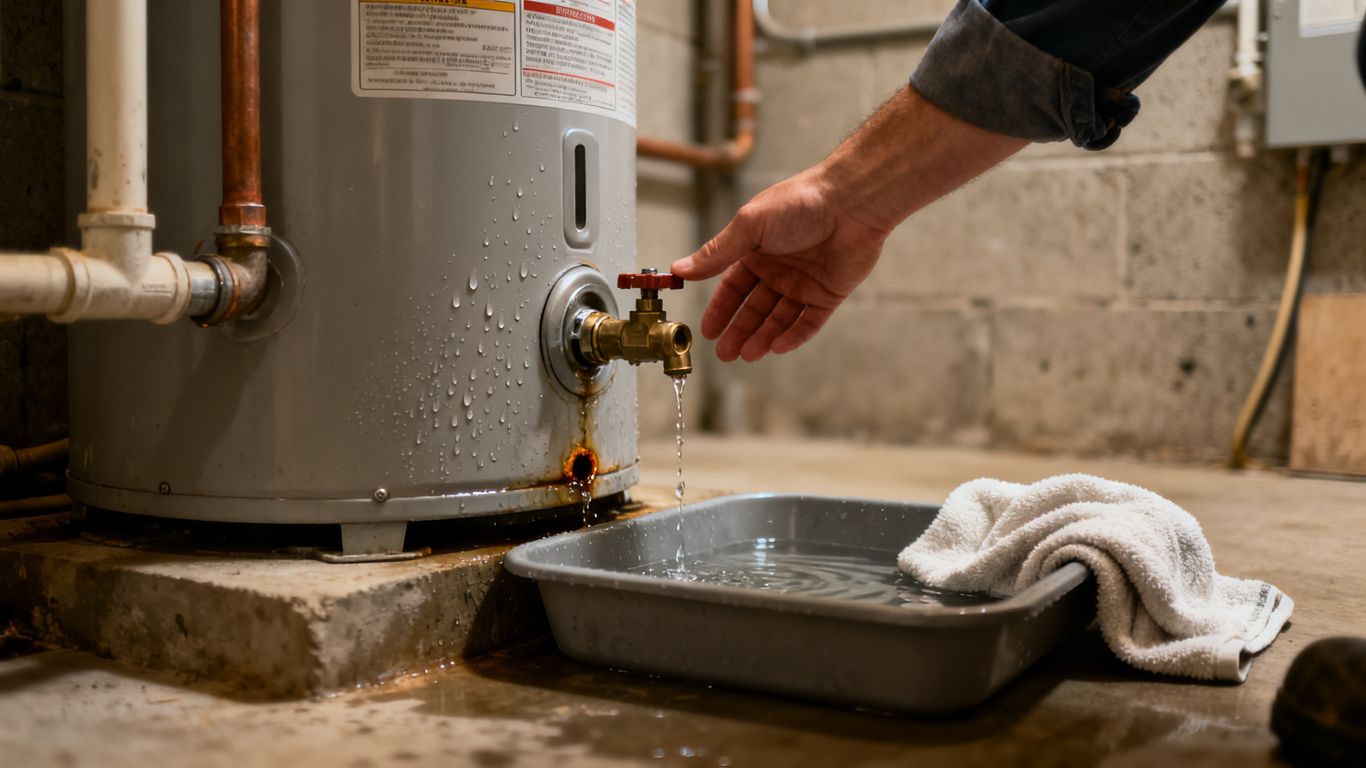
Dry the outside of the unit and check the top connections, inlet and outlet pipes, relief valve discharge tube, drain valve, and base. Condensation can mimic a leak, especially when cold water enters a warm tank, so observe whether moisture returns at a specific fitting. A leak from above may run down the jacket and appear to come from the bottom.
If water is flowing steadily, close the cold-water supply and shut off gas or electricity using the safe procedure for the unit. If the shutoff will not close or the leak is severe, use the home’s main water shutoff and call for emergency service.
Distinguishing repairable leaks from tank failure
A replaceable valve, loose connection, or failed gasket can often be repaired. Water coming from the tank seam, bottom weld, or an area of advanced rust usually means the inner vessel has failed. Once the tank itself is leaking, patching the exterior is not a dependable repair because the pressure-bearing steel continues to deteriorate.
Age, corrosion, and previous leaks matter even when the visible drip seems small. A technician can confirm the source, but water emerging from the tank body generally makes replacement more sensible than repeated component work.
Preventing water damage during an emergency
After shutting off the supply, remove standing water with towels, a wet vacuum, or a pump suitable for the situation. Keep water away from electrical outlets, extension cords, and the heater’s controls. Ventilate wet areas and contact a water-damage professional if flooring, walls, insulation, or cabinets have been saturated.
A pan and drain beneath the heater can limit future damage, though they cannot compensate for a blocked drain or an inaccessible installation. An automatic shutoff or leak sensor may provide earlier warning, but it should supplement—not replace—regular inspection.
Checking the anode rod and corrosion
The anode rod is designed to corrode in place of the steel tank. Over time it can become depleted, particularly in water with conditions that accelerate corrosion. During appropriate service, a technician may inspect or replace it and look for rust at fittings, the tank base, and the relief-valve opening.
A worn anode rod does not prove the tank has failed, but widespread rust or a rod that has been neglected for years raises the likelihood of future leaks. Corrosion is a reason to evaluate the whole unit, not just polish the visible surface.
Estimating water heater repair costs
Repair pricing varies because the same symptom can come from a small part, a difficult installation, or a failing tank. A clear estimate should identify the diagnosis, parts, labor, access conditions, disposal, permits, and any follow-up work. Ask whether the service fee is credited toward the repair and whether the replacement part carries a warranty.
Avoid choosing solely by the lowest initial number. A careful estimate explains what is known, what remains uncertain, and why the recommended repair addresses the cause.
Parts, labor, and service call charges
Common cost categories include the technician’s visit, diagnostic time, replacement components, labor, and cleanup. An element or valve may be relatively straightforward when access is good, while a concealed unit, corroded connection, or complicated vent can increase labor. A full replacement adds equipment, installation, code updates, disposal, and possibly changes to water or gas connections.
Request the estimate in writing. Comparing itemized proposals makes it easier to distinguish a necessary safety upgrade from an optional improvement.
Factors that affect the total repair price
The unit type, capacity, age, location, accessibility, fuel source, and local requirements all influence the final price. Emergency timing can affect service charges, and a leak may create secondary costs for drying or repairing nearby materials. Tankless systems may require specialized cleaning or diagnostic work when mineral buildup affects flow or ignition.
The table below offers a practical way to organize the decision rather than pretending that one price applies to every home.
| Problem pattern | Possible repair scope | Cost concern to ask about |
|---|---|---|
| No hot water | Element, thermostat, pilot, or ignition diagnosis | Is the failed part confirmed? |
| Slow recovery | Sediment service, element, burner, or capacity review | Will cleaning solve the underlying issue? |
| Drip at a fitting | Valve, gasket, or connection repair | Is the tank body still sound? |
| Water from tank body | Replacement planning | Are removal and installation included? |
Use those questions when reviewing an estimate. They keep the discussion focused on the condition of the equipment, not just the price of a single part.
Comparing warranty coverage with out-of-pocket costs
Find the model and serial number, then check the manufacturer’s warranty terms and installation records. Coverage may apply differently to the tank, parts, and labor, and a service call or code-related upgrade may still be payable. Do not assume that a warranty covers damage caused by improper installation, neglect, or an unrelated plumbing problem.
A warranty comparison should include the full out-of-pocket amount and the time required to obtain an approved repair. If the unit is near the end of its expected service life, a covered part may restore operation without resolving broader corrosion or efficiency concerns.
Signs a low-cost repair may not be worthwhile
A cheap repair deserves more scrutiny when the tank is old, has repeated failures, shows widespread corrosion, or has already caused water damage. The same is true when the repair quote approaches a substantial share of a comparable replacement and the unit remains inefficient. A local repair or replacement guide can provide another framework for weighing those tradeoffs.
Ask how long the repair is expected to last and what other parts are showing wear. Paying for a small fix can be sensible, but only when it buys useful service life rather than postponing an inevitable replacement by a few weeks.
Deciding between repair and replacement
Repair is often reasonable when the tank is sound, the fault is isolated, and the unit still meets household demand. Replacement deserves serious consideration when leaks come from the tank, breakdowns recur, or operating costs and performance have steadily worsened. The decision should combine immediate price with reliability, safety, capacity, and future energy use.
There is no universal age cutoff that decides the question by itself. A well-maintained older unit may continue operating, while a younger unit with severe corrosion may not be worth rebuilding.
How age and condition affect the decision
Record the installation date if available and review repair history. A newer heater with a failed thermostat or valve may have many useful years left, while an older heater with a leaking tank, depleted protection, and repeated service calls carries more risk. Condition around the base, fittings, and vent is as meaningful as the date on the label.
Consider the consequences of another failure. If the heater sits above finished space or serves a home that cannot easily tolerate downtime, reliability may justify replacement sooner than a simple repair calculation suggests.
Comparing energy efficiency and operating costs
A replacement can offer better insulation, controls, or heating efficiency, but the purchase price is only one part of the comparison. Estimate household hot-water demand, fuel costs, maintenance, expected life, and installation changes. A larger unit is not automatically more economical if it stores more hot water than the household needs.
Ask for the model’s energy information and compare like-for-like capacity. Operating savings may take time to offset installation costs, so a realistic estimate is more useful than a broad promise of savings.
When to upgrade to a tankless or heat pump model
Tankless systems can make sense when continuous hot water, available fuel or electrical capacity, and installation conditions align. They may need venting changes, larger gas service, electrical work, or periodic descaling. Heat pump water heaters can reduce energy use in suitable spaces, but they need adequate room, airflow, condensate drainage, and an installation plan that fits the home.
An upgrade should solve a real household need rather than follow a trend. Discuss recovery requirements, noise, climate, maintenance, and total installation work before selecting a different technology.
Choosing a qualified water heater repair technician
Look for appropriate licensing, insurance, clear written estimates, and experience with your specific fuel type and model. Ask who will obtain permits when needed, what warranty applies to labor and parts, and how the technician will test the completed work. A reputable professional should be willing to explain why repair or replacement is recommended.
Be cautious of pressure to approve work before the leak or fault is identified. For broader household planning, resources such as a French washing machine guide, Namibia safari guide, or managed IT support guide are unrelated to water heaters, so keep the technician’s recommendation focused on the actual plumbing problem and documented evidence.
Contact Novy Plumbing
When a water heater is leaking, repeatedly failing, or unsafe to inspect, contact Novy Plumbing for help with plumbing service in Peoria and surrounding areas. A professional assessment can clarify whether the next step is a focused repair, emergency leak response, or replacement planning.
Conclusion
Water heater repairing is less about guessing at a failed part and more about reading the symptoms, controlling the risks, and comparing the unit’s condition with the cost of reliable service. Shut down unsafe equipment, protect the home from leaks, and use a qualified technician when gas, electricity, pressure, or tank corrosion is involved. A careful diagnosis gives you the best chance of making a practical repair-or-replace decision.
Frequently Asked Questions
How long do water heaters usually last?
Service life varies by model, water conditions, installation quality, maintenance, and demand. Age should be considered alongside corrosion, repair history, efficiency, and leak location.
What is the first step when a water heater leaks?
Keep people away from hot water, shut off the water supply if safe, and turn off the appropriate gas or electrical source. Then identify whether the leak is from a connection, valve, or the tank itself.
Can a homeowner replace a water heater element?
A capable homeowner may be able to replace an electric element with the power fully isolated and the tank properly drained, but wiring and hot water create serious hazards. If you cannot verify the circuit is de-energized or the tank is full before restoring power, hire a professional.
Why does a water heater make popping or rumbling sounds?
Sediment can collect at the bottom of a tank, allowing water pockets to heat and release suddenly. A flush may help, but persistent noise can also indicate reduced efficiency or a unit that needs broader evaluation.
Is rusty hot water always caused by the water heater?
No. Rusty water can originate in the heater, anode rod, household piping, or the incoming supply. Compare hot and cold taps and have the source checked if discoloration continues.
Should I repair a water heater that is over ten years old?
Age alone does not decide the issue. Repair may still make sense for a sound tank and isolated fault, while a leaking tank, repeated failures, or major corrosion generally supports replacement.
How can I reduce the chance of future water damage?
Inspect connections and the drain area periodically, keep the relief discharge path clear, consider a drain pan and leak sensor, and address corrosion or small drips promptly. Regular professional maintenance can reveal problems before they become an emergency.