
Key Takeaways
Plumbing and fittings work as a connected system, so the right part must match the pipe, application, and local requirements.
- Fittings join, redirect, reduce, cap, and control pipe runs.
- Copper, PVC, CPVC, PEX, brass, stainless steel, and galvanized materials suit different conditions.
- Accurate measurement and clean preparation help prevent leaks.
- Pressure, temperature, water quality, and code requirements should guide selection.
- Accessible connections and shutoff valves deserve regular inspection.
Understanding plumbing pipes and fittings
Plumbing pipes carry water, waste, or other fluids, while fittings give those runs their shape and purpose. A straight pipe alone cannot make a turn, branch toward a fixture, change diameter, or close off an unused opening. Understanding that relationship makes repairs easier and helps prevent mismatched parts.
What plumbing fittings are and how they work
A fitting is a shaped component that joins one or more sections of pipe. Depending on its design, it may connect straight runs, change direction, transition between sizes or materials, or provide a point for control and maintenance. The fitting has to create a secure mechanical or sealed connection without restricting the system more than the design allows.
How fittings connect, redirect, and control water flow
Elbows redirect a run, tees divide it, and reducers move between different diameters. Valves add control by starting, stopping, or regulating flow, while traps retain water to help block sewer gases from entering occupied spaces. These small changes in geometry affect pressure, drainage speed, access, and the amount of room needed around the installation.
Common pipe-to-fitting connection points
Connections appear at fixture supplies, appliance hookups, branch lines, drain transitions, shutoff valves, and changes in direction. Threads, soldered joints, solvent-welded sockets, compression rings, and push-fit seals are common ways to join the pieces. The connection method is not interchangeable: each one depends on the pipe material, fitting design, tools, and installation conditions.
The difference between residential and commercial systems
Residential systems are often compact and serve a limited number of fixtures, whereas commercial systems may have longer runs, greater demand, larger pipe sizes, and more complicated access requirements. Commercial work can also involve specialized equipment and stricter coordination with mechanical, fire, or building systems. In either setting, the basic principle remains the same: size and join every component for the intended service.
Exploring the main types of plumbing fittings
The fitting aisle can seem confusing because several parts look almost alike while performing different jobs. A useful starting point is to identify whether the part changes direction, joins branches, changes size, closes a line, or controls access. This plumbing pipe selection overview can also help when comparing common pipe and fitting categories.
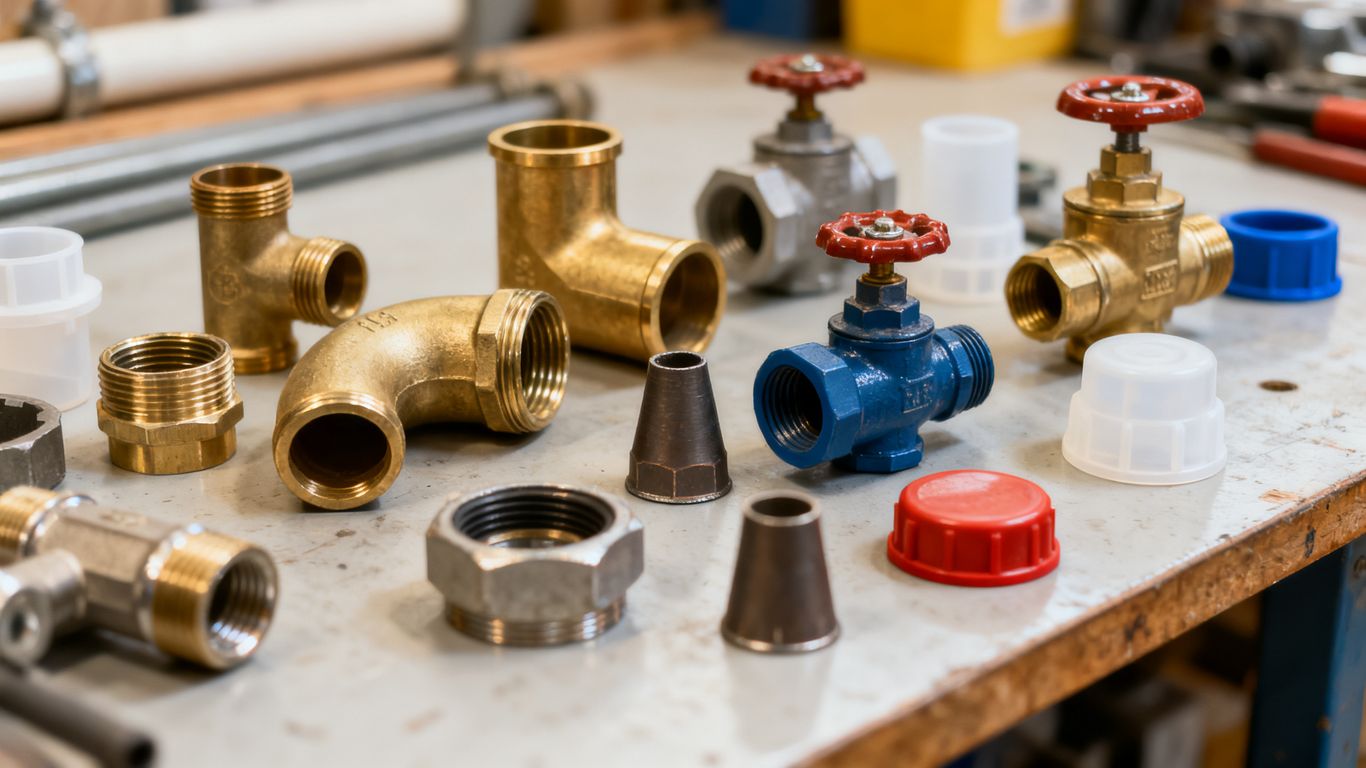
Once the purpose is clear, the shape usually narrows the choice quickly. Always confirm the connection ends and nominal size before purchasing, since appearance alone is not a reliable guide.
Elbows, tees, and couplings
Elbows turn a pipe run, commonly through 45 or 90 degrees, while tees create a branch from a main line. Couplings join two aligned sections and are useful when extending or repairing a run. These fittings may be available with sockets, threads, compression ends, or other connection styles.
Adapters, reducers, and bushings
Adapters connect unlike ends, such as threaded pipe to a solvent-weld socket or one material to another approved transition. Reducers change the diameter of a line, and bushings perform a similar transition in a compact form, often by fitting inside a larger threaded opening. The direction and size of the transition matter, particularly where drainage or pressure-sensitive flow is involved.
A helpful fitting type guide can clarify the difference between reducers, bushings, elbows, and other shapes before a project begins. Choose the part by its actual ends and service rating rather than by a general label such as “adapter.”
Unions, nipples, and caps
A union allows a section to be disconnected without rotating the connected pipes, which is valuable near pumps, heaters, and other serviceable equipment. A nipple is a short piece of threaded pipe used between fittings, while a cap closes the end of a line. Plugs serve a similar closing purpose from inside a threaded fitting.
Valves, traps, and cleanouts
Valves control flow and may be installed at a fixture, appliance, branch, or main supply point. Traps are shaped sections in drainage piping that hold a small water seal, and cleanouts provide access for clearing blockages. Because these parts affect safety and maintenance, they should remain accessible rather than being buried behind permanent finishes.
Comparing plumbing pipe and fitting materials
Material selection affects installation technique, durability, noise, flexibility, and long-term maintenance. No single pipe works best for every supply, drain, temperature, or exposure condition. The fitting must be approved for the same service and joined according to the material manufacturer’s directions.
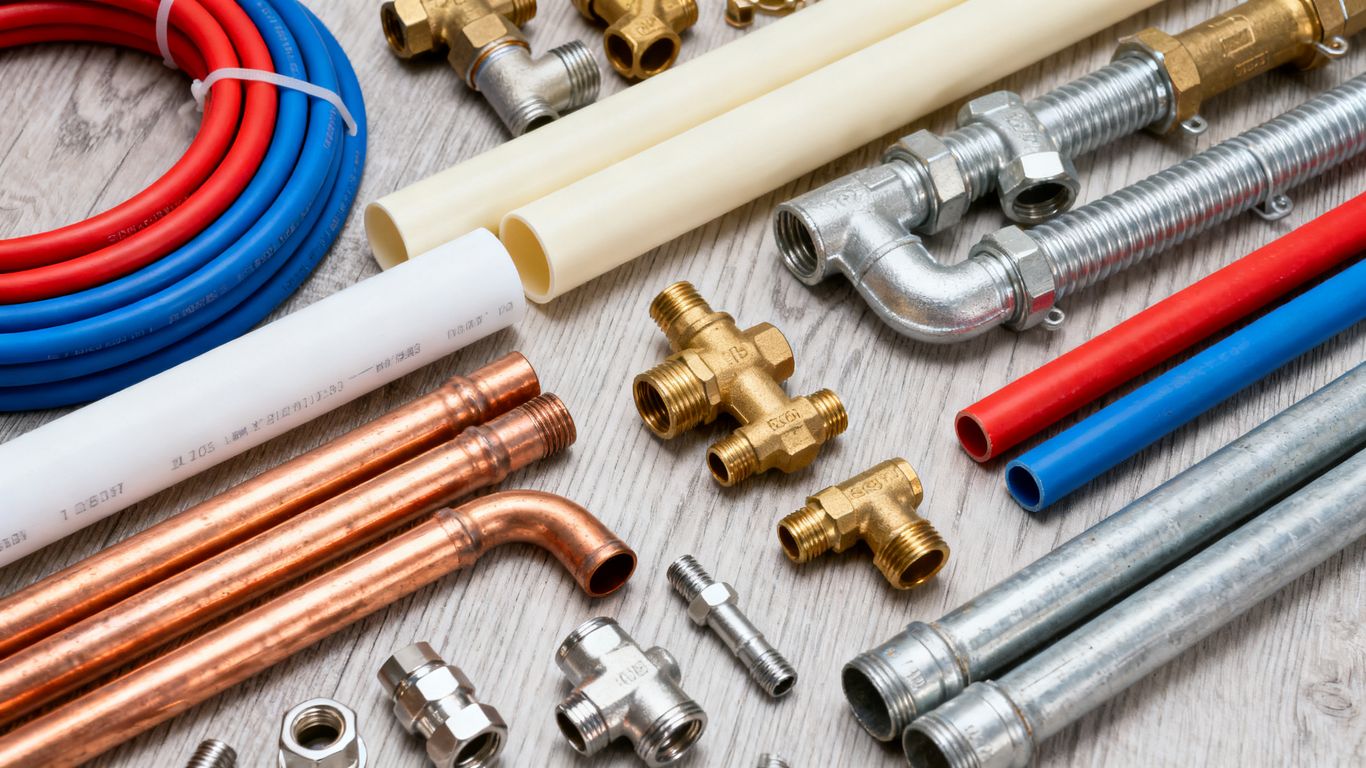
The pipe and fitting reference is useful when comparing connection methods and material transitions. In practice, the environment around the pipe can be just as important as the pipe itself.
Copper for durability and heat resistance
Copper is familiar in water supply work and handles heat well when properly installed. It is rigid, so careful measurement and a suitable sequence of elbows or bends are needed. Copper connections may be soldered or made with approved mechanical fittings, and the pipe should be protected from damaging contact or movement.
PVC and CPVC for lightweight installations
PVC is commonly selected for many cold-water and drainage applications, while CPVC is designed for certain hot- and cold-water uses. Both are relatively light and can be cut without the heavy equipment associated with some metal systems. Their temperature and pressure limits differ, so the specific pipe and fitting markings should be checked rather than assumed.
PEX for flexible water supply lines
PEX can bend around obstacles and often needs fewer joints than a rigid layout. That flexibility can speed routing, but the pipe still needs proper support, bend-radius control, and protection from abrasion or excessive heat. Its fitting system must match the tubing size and the approved connection method.
Brass, stainless steel, and galvanized options
Brass is used in many valves, adapters, and threaded components because it machines well and suits a range of plumbing connections. Stainless steel is selected where corrosion resistance and strength are important, while galvanized steel may appear in older installations. When repairing an older system, inspect the existing pipe condition rather than assuming the visible fitting tells the whole story.
Choosing the right plumbing and fittings
Good selection begins before the trip to the supply counter. Identify what the line carries, where it is located, how it connects, and what loads it will experience. Compatibility comes before convenience, even when a faster-looking fitting is available.
Matching fittings to pipe materials
Start by matching the fitting material and connection style to the pipe. A threaded metal fitting, a solvent-weld plastic socket, a crimp-style PEX fitting, and a push-fit connector each require different preparation and installation practices. Approved transition fittings may be needed when two materials meet, especially where corrosion or movement could affect the joint.
Selecting the correct diameter and pressure rating
Pipe sizes are generally identified by nominal size, which does not always equal the outside or inside measurement. Confirm the marking, measure carefully, and check the fitting label before cutting. Pressure ratings should cover the system’s operating conditions, including temperature effects and any expected surges.
Considering temperature, chemicals, and water quality
Hot water can reduce the allowable pressure of some plastic piping, while chemicals, cleaning agents, soil conditions, and hard or corrosive water can affect materials over time. The intended fluid matters too; a fitting approved for potable water may not be appropriate for another service. Product markings and installation instructions are more dependable than a general material comparison.
Checking local plumbing codes and project requirements
Local codes may govern pipe materials, support spacing, cleanout access, backflow protection, venting, insulation, and shutoff locations. Permit requirements can also vary by project and jurisdiction. A professional plumber selection checklist is useful when the work is large, concealed, or tied to a property sale or inspection.
Measuring, preparing, and installing fittings
Installation quality often depends on preparation rather than force. Shut off the relevant water supply, drain pressure, and make sure the work area is dry enough to inspect. Keep fittings clean and lay out the complete sequence before making a permanent connection.
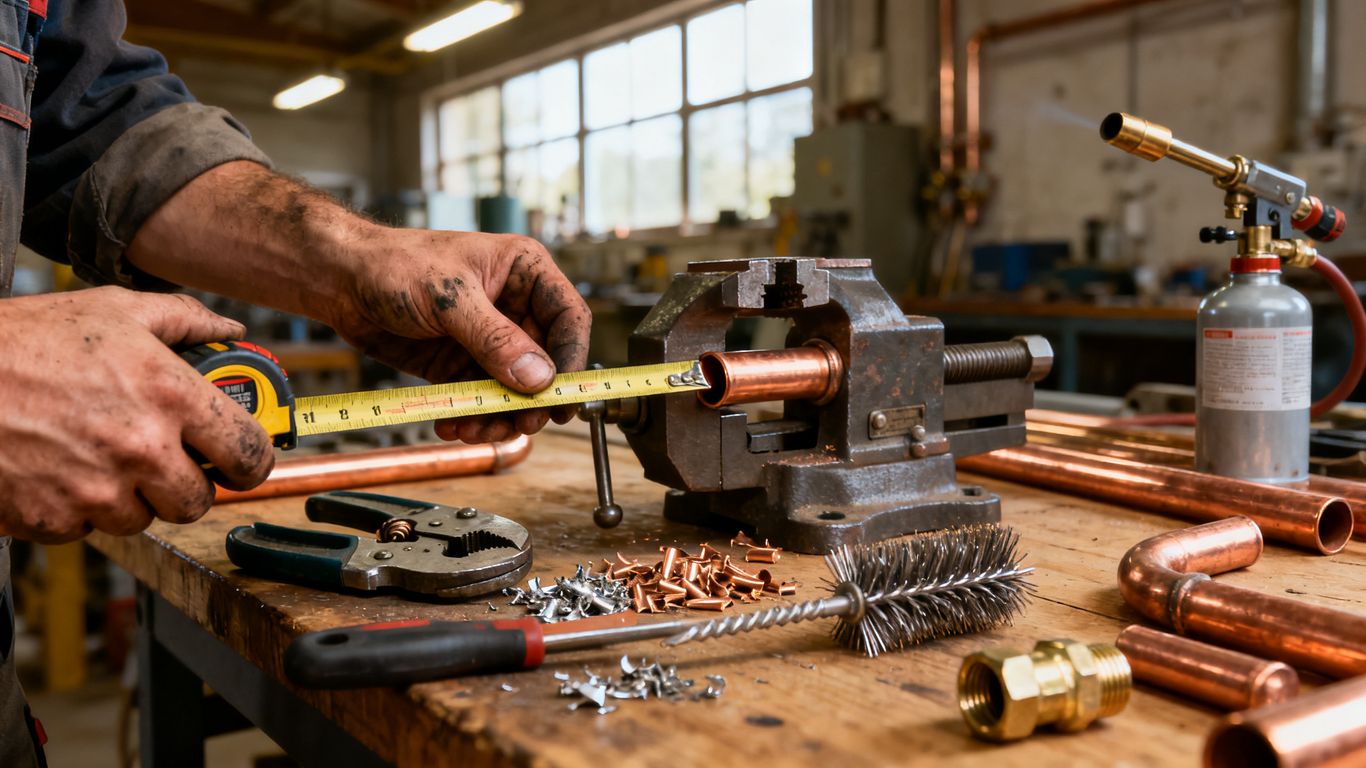
For a visual walkthrough, this article’s companion resource can be paired with a plumbing installation video when planning the order of work. The principles below still apply even when the tools or fitting system changes.
How to measure pipe size accurately
Measure the existing pipe at a clean, accessible point and look for printed markings before relying on a ruler. Outside diameter, inside diameter, and nominal size are different references, so compare the measurement with the fitting manufacturer’s sizing chart. Also measure the available length and account for insertion depth, threading, or the space needed for a union.
Cutting, deburring, and cleaning pipe ends
Make a square cut so the fitting seats evenly. Remove burrs from the inside and outside of the pipe, then clean away dirt, oxidation, oil, and loose material using the method appropriate for the connection. A rushed cleaning step can leave a weak seal or prevent solvent, solder, or a mechanical grip from working as intended.
Using threaded, soldered, solvent-welded, and push-fit connections
Threaded joints depend on aligned threads and an approved sealant or tape used correctly. Soldered joints require clean, fluxed surfaces and controlled heat; solvent-welded joints require compatible primer or cement where specified. Push-fit connections need a smooth, fully inserted pipe and any required stiffener or depth mark.
Preventing leaks during installation
Build the joint without twisting or loading the pipe, and follow the fitting instructions for tightening or cure time. After the work is complete, restore water gradually and inspect every connection with a dry cloth. A slow drip can be easier to find immediately than after the wall or cabinet has been closed.
Avoiding common plumbing and fitting problems
Many plumbing failures begin with a small installation error that remains hidden until the system is pressurized. Problems can also develop gradually through corrosion, movement, freezing, or debris. A deliberate inspection is usually cheaper than treating the damage caused by an unnoticed leak.
Cross-threading and overtightening connections
Threads should start smoothly by hand and remain aligned as the fitting is tightened. Cross-threading damages the mating surfaces, while overtightening can split a plastic fitting, distort a gasket, or weaken a threaded connection. If a joint does not seat correctly, stop and inspect it instead of compensating with more force.
Mixing incompatible materials
Not every pipe and fitting combination is approved, even if the pieces appear to fit. Use the specified transition component when changing materials, and keep incompatible sealants, cements, and washers out of the joint. The materials and fittings guide can provide a useful comparison of common supply options, but the product instructions govern the actual installation.
Managing corrosion and galvanic reactions
When dissimilar metals contact water and each other, galvanic corrosion may damage one of the components. Approved dielectric or transition fittings can help in appropriate situations, while insulation and support may prevent abrasion and trapped moisture. Look for discoloration, pitting, swollen joints, or recurring dampness around older connections.
Identifying leaks, blockages, and water pressure issues
A leak may show as a stain, odor, sound, or unexplained increase in water use. Blockages often produce slow drainage, gurgling, or backups, while pressure problems can affect several fixtures at once. Close the nearest shutoff when practical, document what changed, and avoid opening concealed areas until the likely source is understood.
A smart shutoff can add another layer of awareness in some homes. For example, Moen Flo is described as monitoring plumbing 24/7, detecting anomalies in flow and pressure, automatically shutting off water, and sending phone alerts. It is not a substitute for correct fittings or a repair, but those documented functions may help identify a problem when the property is unattended.
Maintaining and replacing plumbing and fittings
Maintenance is mostly observation and timely action. Check accessible joints, valves, supply hoses, traps, and exposed pipe for moisture, mineral deposits, rust, movement, or damage. Keep shutoff valves reachable and operate them carefully from time to time if the manufacturer and local conditions make that appropriate.
Inspecting accessible connections and shutoff valves
Use a flashlight and a dry tissue or cloth around joints that are difficult to see. Confirm that shutoff handles are not seized and that cabinets remain dry after fixtures are used. A documented water-monitoring device such as Moen Flo may also detect unusual flow or pressure and alert a phone, but the physical system still needs inspection.
When to repair a fitting versus replace it
A replaceable washer, gasket, or accessible valve component may solve a localized problem when the body of the fitting is sound. Cracks, severe corrosion, damaged threads, repeated seepage, and distorted plastic usually justify replacement. Repairing one weak part without addressing movement, poor support, or excessive pressure can simply move the failure downstream.
Selecting replacement parts for older systems
Record the pipe material, nominal size, connection type, and the part’s location before buying a replacement. Older systems may use dimensions or fitting styles that are no longer common, and a visually similar modern part may not be suitable. The replacement should preserve access, service rating, and code compliance rather than merely filling the same opening.
Knowing when to hire a licensed plumber
Call a licensed professional for concealed leaks, sewer or gas concerns, major repiping, persistent pressure problems, backflow equipment, or work requiring a permit. Professional help is also sensible when the water cannot be safely isolated or the repair affects several units. For additional protection against unattended water damage, Moen Flo is described as automatically shutting off water when it detects certain flow or pressure anomalies; installation and system decisions should still be evaluated for the property.
Get Plumbing Help Locally
If a fitting problem has moved beyond a simple accessible repair, contact Novy Plumbing for help with plumbing work in Peoria and surrounding areas. Request plumbing service to discuss the issue and the next practical step.
Conclusion
Plumbing and fittings are easier to manage when each part is treated as part of one system: identify the service, match materials and sizes, prepare the pipe carefully, follow the connection method, and test before closing the work area. Regular inspection then catches small problems while they are still manageable.
Frequently Asked Questions
What is the difference between a pipe and a fitting?
A pipe primarily carries fluid along a route, while a fitting joins, redirects, branches, reduces, closes, or provides control and access within that route.
How do I know what size fitting to buy?
Check the pipe markings, determine whether the measurement refers to nominal size or actual diameter, and compare both ends of the fitting with the manufacturer’s sizing information.
Can different plumbing materials be connected together?
They can sometimes be connected, but only with an approved transition fitting and a connection method suitable for both materials and the intended service.
Are push-fit fittings reliable?
A push-fit fitting can perform well when it is approved for the pipe, fully inserted on a clean and smooth end, supported correctly, and installed according to its instructions.
Why do threaded fittings leak?
Common causes include cross-threading, poor alignment, damaged threads, incorrect sealant use, overtightening, or selecting a fitting with the wrong size or pressure rating.
How often should plumbing connections be inspected?
Inspect accessible connections periodically and whenever you notice dampness, staining, odor, unusual sounds, pressure changes, or unexplained water use; hidden systems deserve attention during other maintenance or renovation work.
When should I call a professional plumber?
Hire a licensed plumber for concealed or extensive leaks, sewer or gas issues, major repiping, permit-required work, unsafe shutoff conditions, and problems that continue after a straightforward repair.