
Key Takeaways
A water heater expansion tank gives heated water somewhere to expand when the plumbing system cannot send it back toward the supply. The right size, installation, and maintenance depend on the home’s setup.
- Heating makes water expand, which can raise pressure in a closed plumbing system.
- A check valve or pressure-reducing valve may prevent expanded water from flowing back into the supply.
- Tank size depends on factors such as water-heater capacity and system pressure.
- Correct air charge, secure support, and sound connections all matter.
- Persistent pressure changes, leaks, or corrosion call for investigation and may mean replacement is needed.
What a water heater expansion tank does
A water heater expansion tank is a small pressure-management vessel connected to the plumbing near the heater. It accommodates some of the extra volume created as water warms, rather than leaving that expansion to push against the plumbing system. The details vary by installation, but the basic idea is straightforward: provide a cushion for changing water volume.
How water expands as it heats
Water takes up more space when heated than when cool. In a plumbing system with room for water to move backward, some of that added volume can flow toward the supply. When that route is blocked, the change in volume can instead raise pressure in the pipes and equipment.
This is one reason a plumbing system is best understood as a connected network, rather than just the water heater and a few nearby pipes. The heater, valves, fixtures, and supply line all affect how pressure behaves as water warms.
How the tank absorbs excess pressure
Inside a typical expansion tank, a flexible bladder separates the water side from a cushion of air. As heated water expands into the tank, the air compresses and provides room for the added volume. That air-cushion action helps limit pressure increases; it does not cool the water or increase the heater’s capacity.
The tank must be suitable for the system and in working condition to do its job. For a closer look at the basic mechanism, see this expansion tank overview. A damaged bladder or lost air charge can reduce the tank’s ability to absorb expansion.
Why some plumbing systems need one
Whether a home needs an expansion tank depends in part on whether its plumbing is open or closed to backward flow. A closed system can trap the extra volume created during heating, so pressure may rise unless an appropriate device provides a place for that water to go. Local requirements and equipment instructions also matter.
A tank does not replace pressure controls or repair a faulty valve. It is one part of a system, and its purpose is easiest to understand alongside the valves and piping that shape water movement.
How to tell whether your system needs an expansion tank
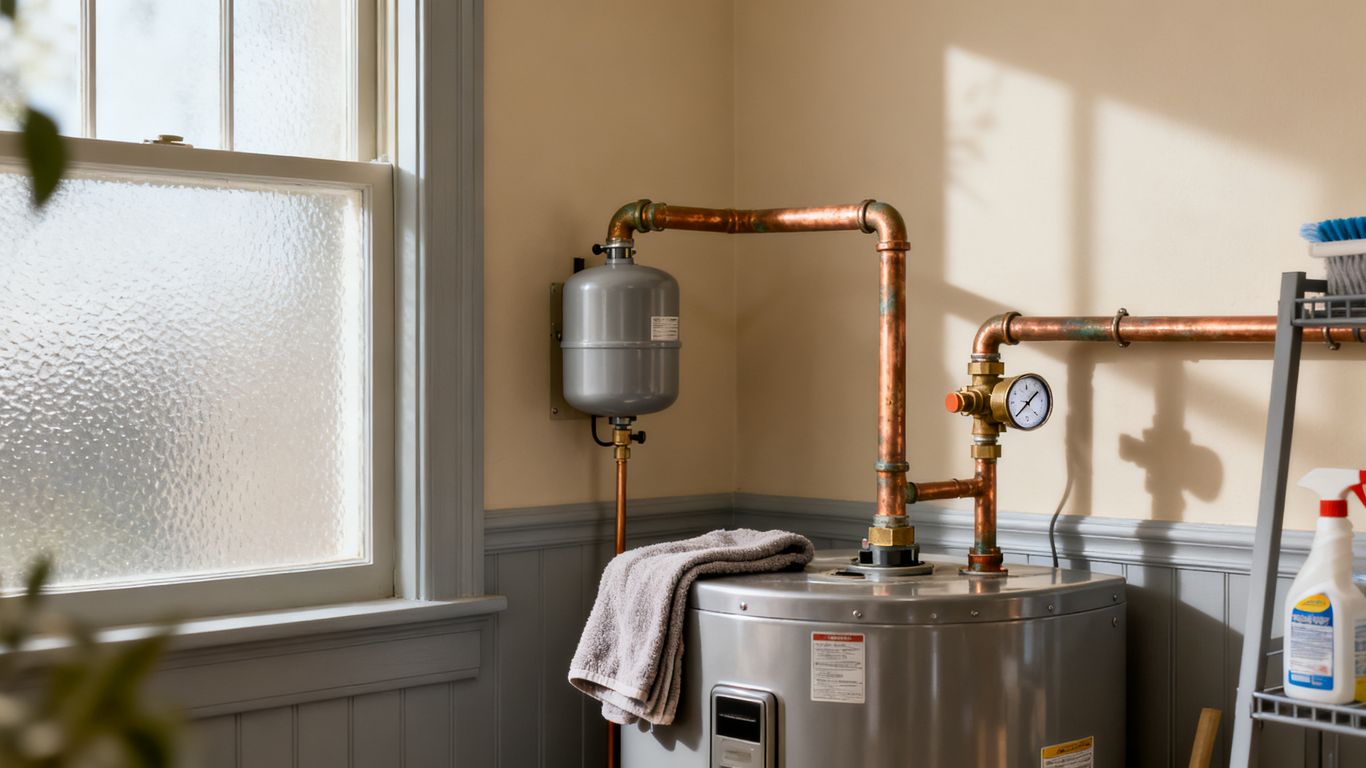
A water heater expansion tank may be needed when a valve or other device prevents water from flowing back toward the public supply. The tank’s presence alone does not confirm that it is correctly sized, charged, or connected. Start by identifying the plumbing arrangement, then check the local code and water-heater instructions before drawing a conclusion.
What a closed plumbing system means
A closed plumbing system restricts water from flowing back toward the supply. That can happen when a backflow-prevention device or a valve separates the home’s plumbing from the incoming line. When water in the heater expands, it then has fewer places to go, making pressure control more relevant.
The setup is not always obvious from a glance at the heater. A plumber can identify the valves and determine whether the system is closed, including in homes where the components are located away from the water heater.
How a check valve or pressure-reducing valve affects expansion
A check valve allows water to move in one direction, while a pressure-reducing valve lowers incoming pressure. Depending on the arrangement, either may prevent heated water from moving backward into the supply. That can make thermal expansion more noticeable on the home side of the valve.
Moen Flo is described as a smart water shutoff system that monitors plumbing for leaks and can automatically shut off water. It is a separate kind of device from an expansion tank; the presence of a shutoff system does not establish whether a home needs a tank.
What local codes and manufacturer instructions may require
Requirements can vary by location and by the water heater’s installation instructions. Check the applicable local plumbing code and the heater documentation rather than relying on a general rule or a neighbor’s setup. The chosen tank must also be compatible with the system’s pressure and installation conditions.
Online search results can mix plumbing guidance with unrelated subjects, such as French property financing, teen residential treatment, microplastics exposure, and Hot Water Comedy Club. Those links are unrelated to deciding whether a home needs an expansion tank, so use local code and equipment instructions for that question.
How to choose and size an expansion tank
Choosing a tank is not just a matter of picking one that fits beside the heater. It needs to suit the volume of water involved and the pressure conditions where it will operate. If replacing an existing tank, verify that the replacement matches the installation rather than assuming the old model was correctly selected.
Which details determine tank size
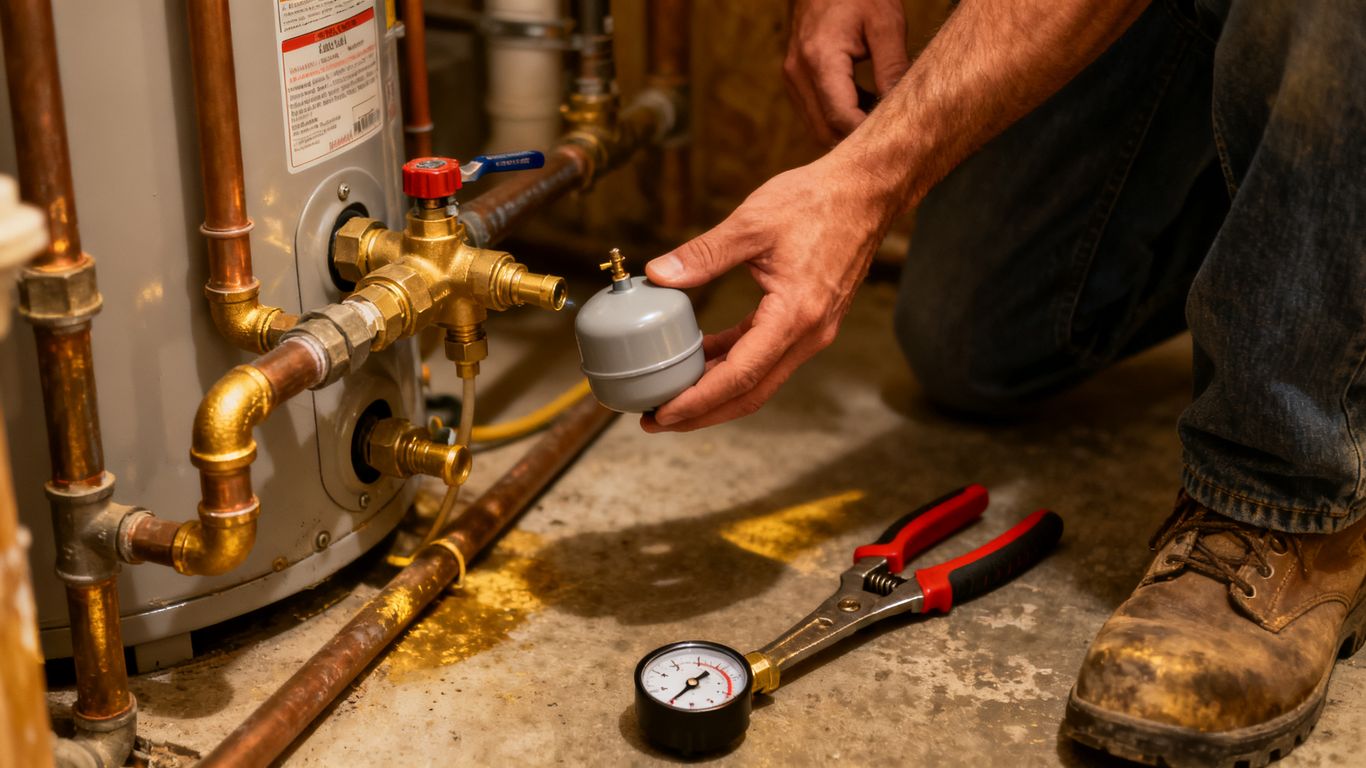
Tank sizing depends on details such as the water heater’s capacity, the incoming water pressure, and the tank’s specified operating range. The manufacturer’s sizing information is the best starting point because models can differ. A plumber may also need to account for the system layout and any pressure-control devices.
The table below summarizes the main information to gather before choosing. These factors work together, so one detail alone cannot determine the right tank.
| Detail to confirm | Why it matters | Where to check |
|---|---|---|
| Water-heater capacity | Helps establish the amount of heated water in the system | Heater label or manual |
| Water pressure | Affects the tank’s pressure conditions and sizing | Measured at the home |
| Tank specifications | Sets the tank’s stated capacity and operating limits | Product label or instructions |
| Plumbing arrangement | Shows whether expansion is restricted from flowing backward | Valve layout and local assessment |
Use the heater manual and the selected tank’s instructions together. If the information is missing or inconsistent, getting a qualified plumber to confirm the selection is safer than guessing.
How water pressure and heater capacity factor in
Higher system pressure and greater heater capacity can affect how much expansion the tank must accommodate. That is why two homes with similar-looking heaters may not use the same tank. The tank’s air charge also needs to be appropriate for the water pressure at its connection point.
Do not use a generic rule of thumb as a substitute for checking the actual system. If pressure is unknown, it should be measured with suitable equipment before a tank is selected or charged.
How to check that a replacement matches the system
Compare the replacement tank’s specifications with the heater capacity, measured water pressure, connection, and manufacturer requirements. Check that the tank is rated for the system and can be installed in the available space with adequate support. A matching appearance or thread size by itself does not establish compatibility.
If the old tank’s label is readable, record its details, but treat them as a reference rather than proof it was the correct size. A professional can verify the replacement choice where the system details are unclear.
Where and how an expansion tank is installed
An expansion tank is generally connected to the cold-water supply serving the water heater, in a location that allows a sound connection and proper support. Exact placement depends on the plumbing layout and the tank manufacturer’s instructions. The work also involves shutting off and relieving water pressure, so careful installation matters.
How the tank connects to the cold-water supply
The tank connects to the water-heater plumbing on the cold-water side, where it can receive expanding water from the hot-water system. The specific fitting and position depend on the installation. Follow the tank instructions and applicable plumbing requirements rather than relying on a single arrangement as universal.
The connection should be secure and compatible with the pipe material and fittings. An improperly sealed or stressed connection can leak, even if the tank itself is in good condition.
Why orientation and support matter
The approved orientation is set by the tank manufacturer and the installation conditions. A tank supported only by a small section of pipe may put unnecessary strain on the connection, particularly if mounted horizontally. Proper bracing helps keep the assembly stable over time.
Before installation is considered complete, check these practical points:
- The tank is positioned and oriented as its instructions specify.
- The tank has suitable support independent of weak or stressed piping.
- The connection is tight and compatible with the plumbing materials.
- The area remains accessible for future inspection.
These checks help reduce avoidable stress on the piping and make future inspection easier. They do not replace a pressure test or a review of local installation requirements.
When installation is best left to a licensed plumber
A licensed plumber is a sensible choice when the plumbing layout is unfamiliar, pressure is unknown, or code requirements are uncertain. Professional help is also appropriate if the work involves changing valves, modifying piping, or resolving repeated leaks. A plumber can confirm the tank selection and evaluate the rest of the system rather than treating the tank as an isolated part.
For a straightforward replacement, the same checks still apply: correct size, suitable air charge, secure support, and a leak-free connection. If any step is unclear, pause and get qualified help.
How to inspect and maintain an expansion tank
An expansion tank is often easy to overlook because it may sit above or beside the water heater. Periodic visual checks can reveal leaks, corrosion, or a loose connection, but they cannot confirm every internal fault. Follow the manufacturer’s maintenance instructions and use a plumber when testing requires depressurizing the system.
How to check the tank’s air charge
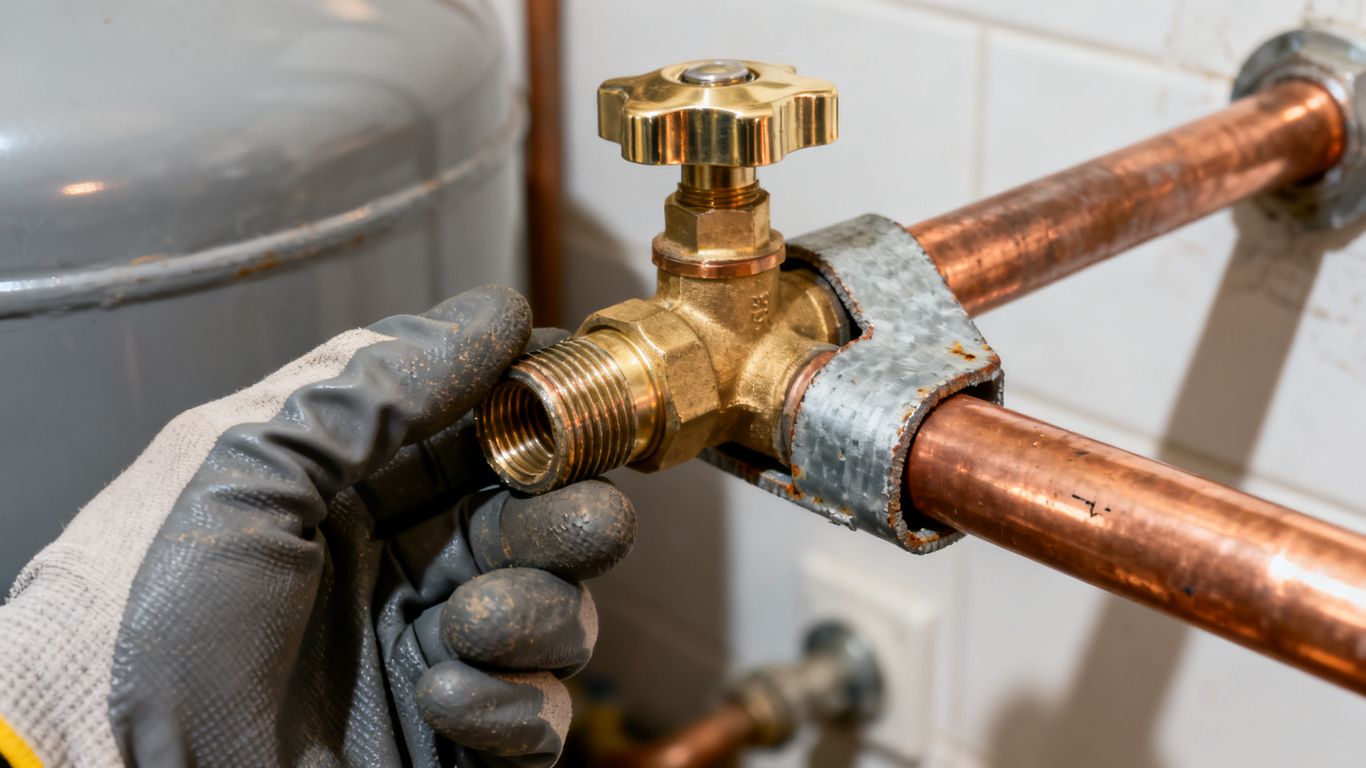
The air charge should be checked with the water side depressurized, using the method specified by the tank manufacturer. A pressure gauge can be used at the air valve, but a reading taken while the tank remains under water pressure may not reflect the proper pre-charge. Do not press the valve casually if water may be present or the system has not been prepared safely.
If the charge needs correction, it should be set according to the system pressure and the tank instructions. When you are unsure how to isolate and depressurize the tank, have a plumber perform the check.
What signs of waterlogging or failure to look for
Look for moisture at the tank or threaded connection, visible corrosion, and unusual movement or strain in the pipework. A tank that has lost its air cushion or has a failed bladder may no longer absorb expansion effectively. A visual inspection can point to a problem, but it cannot always identify the internal cause.
If water comes from the air valve, that can indicate an internal bladder failure in a bladder-style tank. Avoid assuming that adding air will fix a tank with a damaged bladder; replacement may be needed.
How often to inspect the tank and connections
Check the tank and nearby connections periodically, and include them when inspecting the water heater or plumbing for leaks. Follow any inspection schedule in the equipment instructions. There is no single interval that applies to every home, especially where water conditions, installation, and equipment differ.
A quick visual check can catch obvious changes, but air-charge testing is a separate task and may require isolating the tank. Keeping a note of the tank’s condition and any pressure symptoms can help a plumber diagnose recurring issues.
When to repair or replace an expansion tank
An expansion tank may need attention when pressure problems persist, the tank leaks, or the plumbing around it shows signs of stress. First determine whether the cause is the tank, its air charge, the water pressure, or another part of the system. Replacement is not a cure for every pressure problem, so diagnosis matters.
What persistent pressure changes may indicate
Pressure that repeatedly rises when the heater operates may suggest that the system is not accommodating thermal expansion as intended. It can also reflect other conditions, including a faulty pressure-control component or an incorrect setting. A qualified person can measure pressure and determine when and where the change occurs.
Keep track of when symptoms appear, such as after a heating cycle, and report that pattern during an inspection. Those details can help distinguish a recurring system issue from a one-time fluctuation.
How leaks, corrosion, or a failed bladder affect performance
A leaking tank or corroded connection needs prompt attention because water can damage nearby materials and the tank may no longer function as intended. A failed bladder can remove the separation between water and air that lets the tank absorb expansion. In those cases, replacement is often more appropriate than trying to restore the internal component.
Do not ignore a small drip or assume surface corrosion is harmless. If water is actively leaking, shut off the supply if you can do so safely and arrange an assessment.
What to check after installing a replacement
After replacement, confirm that the tank is the specified size, its air charge is set appropriately, and its orientation and support follow the manufacturer’s instructions. The connection should be checked for leaks, and system pressure should be assessed as needed. A replacement that is connected but not correctly charged or supported may not resolve the original issue.
After the installation, monitor the area during normal heater operation for moisture or recurring pressure symptoms. If the problem continues, have the entire system evaluated rather than replacing parts by guesswork.
Contact a Plumbing Professional
If you need help checking a tank or arranging water-heater work, contact Novy Plumbing to ask about service in the Peoria area.
Conclusion
A water heater expansion tank manages the extra volume created as water heats, especially when valves keep that water from flowing back toward the supply. Confirming the system type, sizing the tank from actual pressure and heater details, and keeping the tank supported and in good condition can help it do its job; persistent symptoms deserve a proper diagnosis.
Frequently Asked Questions
What does a water heater expansion tank do?
It provides a space for water to expand as it heats, using an air cushion to help limit pressure increases in a closed plumbing system.
Does every water heater need an expansion tank?
No. Whether one is needed depends on the plumbing arrangement, applicable local requirements, and the water-heater manufacturer’s instructions.
How can I tell whether my plumbing system is closed?
A check valve, backflow-prevention device, or pressure-reducing valve may restrict water from flowing back toward the supply. A plumber can assess the layout and confirm how it operates.
How is an expansion tank sized?
Sizing depends on factors including water-heater capacity, system water pressure, and the tank’s specifications. Use manufacturer guidance and confirm uncertain measurements before choosing a tank.
Where is an expansion tank installed?
It is commonly connected to the cold-water supply serving the water heater. The correct position and orientation depend on the system and the tank manufacturer’s instructions.
How often should an expansion tank be inspected?
Check the tank and connections periodically for leaks, corrosion, or signs of strain, and follow the manufacturer’s guidance for additional testing.
Can I recharge an expansion tank myself?
Checking or adjusting the air charge requires the water side to be depressurized and the tank instructions to be followed. If you cannot safely isolate the tank or confirm the correct pressure, ask a plumber to do it.