
Key Takeaways
Starting a career in the skilled trades offers significant stability and the opportunity for lifelong professional growth. Successful candidates focus on technical proficiency, legal licensing, and strong interpersonal skills throughout their training.
- Acquire foundational knowledge through vocational education or accredited trade schools.
- Prioritize obtaining a state-issued license to ensure professional legitimacy.
- Develop critical troubleshooting skills to address complex mechanical challenges efficiently.
- Leverage apprenticeship programs to blend classroom theory with essential field experience.
- Focus on clear communication and reliability to build a strong client base.
Understanding the daily life of a plumber
Transitioning into the trades requires an honest look at the day-to-day reality of the work. It is not just about tightening pipes; it is a dynamic profession involving constant problem-solving and site navigation. Understanding these variables early helps prospective tradespeople prepare for the realities of the field.
Typical work environments and job sites
Plumbers operate in diverse settings, ranging from cramped under-sink spaces in residential kitchens to expansive commercial construction projects. Working in these varied environments requires adaptability and the ability to navigate different mechanical systems while adhering to strict environmental standards.
Common duties performed during a standard shift
Every day presents new mechanical hurdles, from installing modern fixtures to diagnosing complex drainage failures. Technicians often spend their time clearing blockages, installing water heaters, or conducting routine inspections to identify wear before it causes major disruption. Novy Plumbing often reinforces that professional consistency is the bedrock of service, and you can learn more about how they approach these challenges through expert plumbing advice and practical tips.
Managing the physical demands and safety protocols
Physical stamina is essential, as the work often involves lifting heavy equipment and working in awkward, constrained positions. Maintaining safety protocols is non-negotiable to protect yourself and the client, requiring strict adherence to OSHA standards and local codes. For those pursuing this career path, understanding licensed Illinois plumber standards provides a clear baseline for safe operational practices.
Essential education and certifications for a plumbing job

Education for a trade career is a structured pathway designed to turn a novice into a competent specialist. Beyond physical aptitude, you must demonstrate a commitment to both formal education and ongoing regulatory compliance to advance your career effectively.
Obtaining a high school diploma or GED
A solid foundation in mathematics and reading is critical for calculating pipe pitch and reading complex schematics. Many apprenticeship programs require a high school diploma or equivalent as a minimum entry requirement to ensure students are prepared for technical instruction.
Enrolling in vocational or trade school courses
Vocational programs provide the theoretical and practical base many employers seek. Programs like those offered in a rewarding career in plumbing allow students to practice installations in controlled environments while mastering fundamental concepts before stepping onto a job site.
Researching state-specific licensing requirements
Every state has unique regulations for trade licensing that determine how you can operate independently or as a professional. Once a technician reaches the required hours of experience, they must often pass a state examination to earn the title of a journeyman. Researching these specific laws early ensures that your hours spent working in the field qualify toward your final certification.
Developing the necessary technical and soft skills
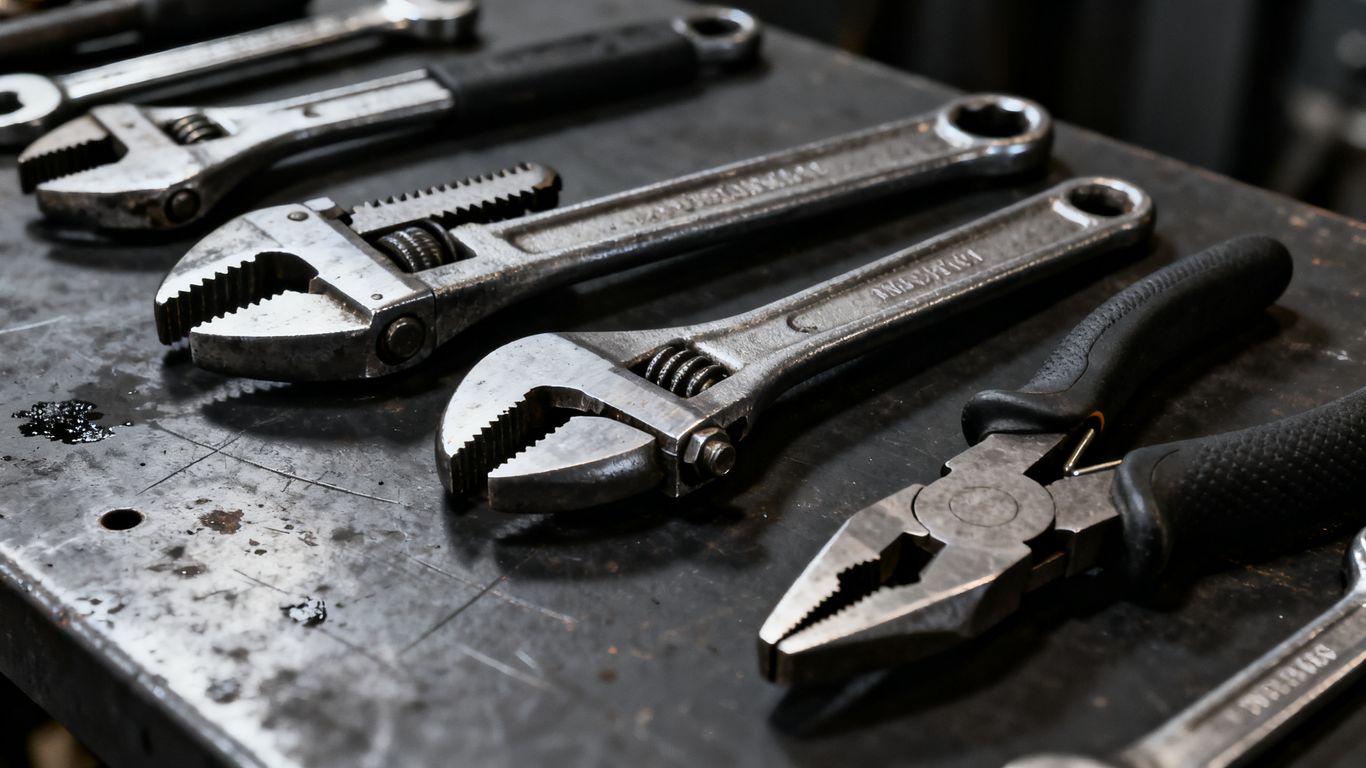
Technical proficiency is only half the battle when working with clients in their homes or businesses. Success in a plumbing job relies heavily on how effectively you can interpret complex systems while maintaining a calm, professional demeanor during stressful situations.
Mastering basic pipefitting and blueprint reading
Technical mastery starts with understanding how different materials react to pressure and temperature. You must be able to visualize three-dimensional systems from two-dimensional architectural blueprints to route lines correctly.
Improving critical thinking for troubleshooting issues
Great plumbers do not just swap old parts for new ones; they identify why the original failure occurred in the first place. You will need to build the following analytical habits to excel:
- Observe how liquid flow changes under different pressure levels.
- Logic-test various segments of a plumbing system to isolate hidden leaks.
- Document every mechanical finding to assist in future repairs.
- Evaluate material compatibility to avoid galvanic corrosion in pipe joints.
After identifying the source of a pipe issue, you can begin to offer lasting solutions rather than temporary fixes that lead to callbacks.
Enhancing customer service and communication abilities
Explaining complex mechanical issues to a homeowner in plain English is a vital talent that sets apart the best professionals. Building trust through transparency ensures clients feel comfortable with your services and are more likely to recommend your work to others.
How to find and apply for plumbing job openings
Finding that plumbing job is often about demonstrating character as much as it is about displaying technical skills. Hiring managers for established firms are looking for candidates who show up on time, take ownership of their tasks, and express a genuine desire to learn the craft.
Utilizing local job boards and industry-specific websites
Modern job seekers should use specialized trade boards rather than general employment sites. Companies often post openings there because they know the applicants will possess the preliminary interest or certifications required to succeed in a demanding field.
Networking with established local contractors and unions
Relationships are essential in the world of trade services. Attending local trade union meetings or reaching out to local firms directly can provide opportunities that are not listed on traditional job boards.
Preparing a professional resume for trade applications
Even when applying for manual roles, a clean and professional resume is essential. Focus on highlighting your safety certifications, mechanical knowledge, and any previous experience with site work, which shows employers you take your professional development seriously.
Preparing for a successful plumbing apprenticeship
For those entering the industry, the apprenticeship phase is the most critical time for professional development. During this time, you will work under the guidance of experienced professionals who teach you the nuances of the trade that textbooks simply cannot capture.
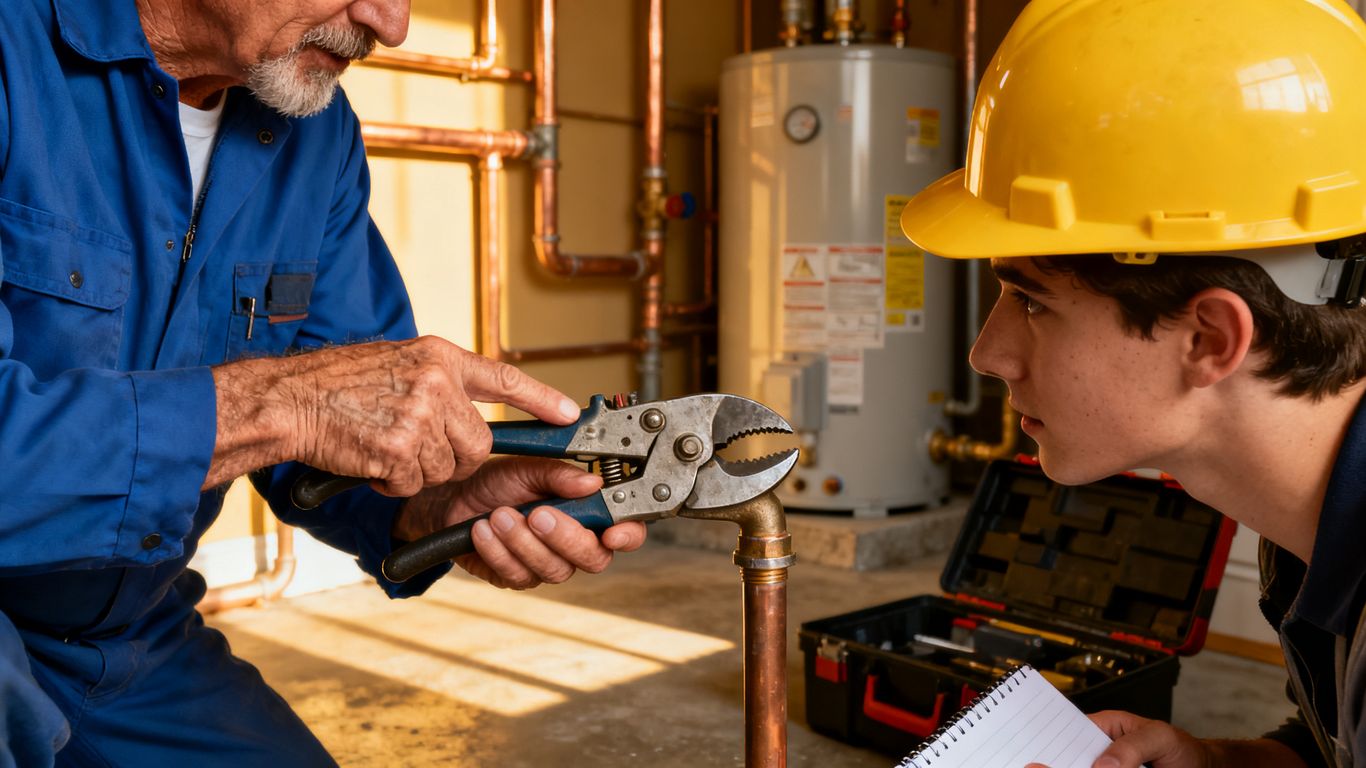
Finding a reputable mentor or master plumber
Learning from a veteran provides insight into both time-management and ethical business practices. A skilled mentor will guide you through complex installations, turning your theoretical knowledge into gaining hands-on experience in the field. Establishing this plumbing job relationship early is essential for your growth.
Balancing technical classroom learning with field work
Most high-quality apprenticeships require a dual-track approach to learning. Here is how modern programs typically structure the training timeline:
| Training Phase | Focus Area | Required Activity |
|---|---|---|
| Year 1-2 | Fundamentals | Basic tool handling and safety basics |
| Year 3-4 | Intermediate | System installation and troubleshooting |
| Year 5 | Advanced | Code compliance and trade leadership |
This structured approach ensures that you are comfortable in the classroom before you apply those engineering concepts to real-world residential or commercial plumbing projects.
Tracking hours to meet apprentice program milestones
Maintaining accurate logs of your field hours is a task you must handle with strict diligence. Your ability to eventually apply for your state licensure exam depends entirely on having a verified record of your work hours performed under a licensed contractor.
Advancing your career in the plumbing industry
Advancement in this industry is a continuous process of proving your capability to handle larger and more complex projects. As you gain more years of hands-on work, you move from basic installations to system design and business management.
Transitioning from apprentice to journeyman status
Moving to a journeyman role signifies that you can manage a site and perform the majority of core plumbing tasks without direct supervision. This transition is usually marked by passing a state or municipal exam after completing the required field hours.
Pursuing a master plumber license and business ownership
After years of successful practice, many journey-level plumbers go on to earn a master license. This allows them to lead their own crews, pull permits, and eventually run their own service companies with confidence.
Specializing in niche fields like HVAC or gas fitting
Diversifying your skillset into specialized sectors can lead to higher specialized pay and greater career stability. Whether you focus on industrial gas lines or high-efficiency HVAC systems, specialization ensures you remain an invaluable asset in the marketplace.
Conclusion
Navigating your way toward a professional career in the trades is a journey defined by patience, continuous learning, and a commitment to quality standards. By focusing on your technical foundations, securing necessary credentials, and learning from experienced mentors, you can build a stable and lucrative career that keeps communities functioning safely for years to come.
Frequently Asked Questions
Can I work as a plumber without formal training?
You generally cannot work as a licensed professional without undergoing formal training and completing an apprenticeship. Most states require thousands of field hours and a pass on a state-administered exam to legally perform pipe work for clients.
How long does a typical plumbing apprenticeship last?
A standard apprenticeship program typically lasts between four and five years. This duration ensures that you receive a balanced combination of supervised field experience and classroom instruction in mechanical systems.
Are there different types of plumbing licenses?
Yes, licensing categories generally progress from apprentice to journeyman and finally to master plumber. Each level requires different qualifications, such as documented hours worked and exams passed, to operate legitimately in your jurisdiction.
What soft skills are most important for new plumbers?
Communication, integrity, and problem-solving are paramount for any trade professional. Being able to explain maintenance issues to clients clearly and demonstrating professional reliability builds the trust necessary to succeed in a service-oriented business.
What sort of tools should I buy first?
Most employers expect you to own basic hand tools like pliers, wrenches, and screwdrivers when you start your apprenticeship. As your career progresses, your employer will typically provide larger, more expensive specialty gear, but keeping your personal kit in top shape shows initiative.
How challenging is the physical work in plumbing?
The job is physically active and requires individuals who can work in crawl spaces, lift heavy fixtures, and handle strenuous tasks throughout the day. If you enjoy manual dexterity tasks and staying mobile, the physical nature of the work often feels rewarding rather than just taxing.
Can I specialize in commercial plumbing early?
While most apprentices begin with residential projects, you can eventually seek positions with companies that focus on large-scale commercial HVAC or sanitation systems. It is common to focus on these niches as your technical expertise grows and you move toward becoming a journeyman.